Some links are affiliate links: as an Amazon Associate we earn from qualifying purchases. See our affiliate disclosure.
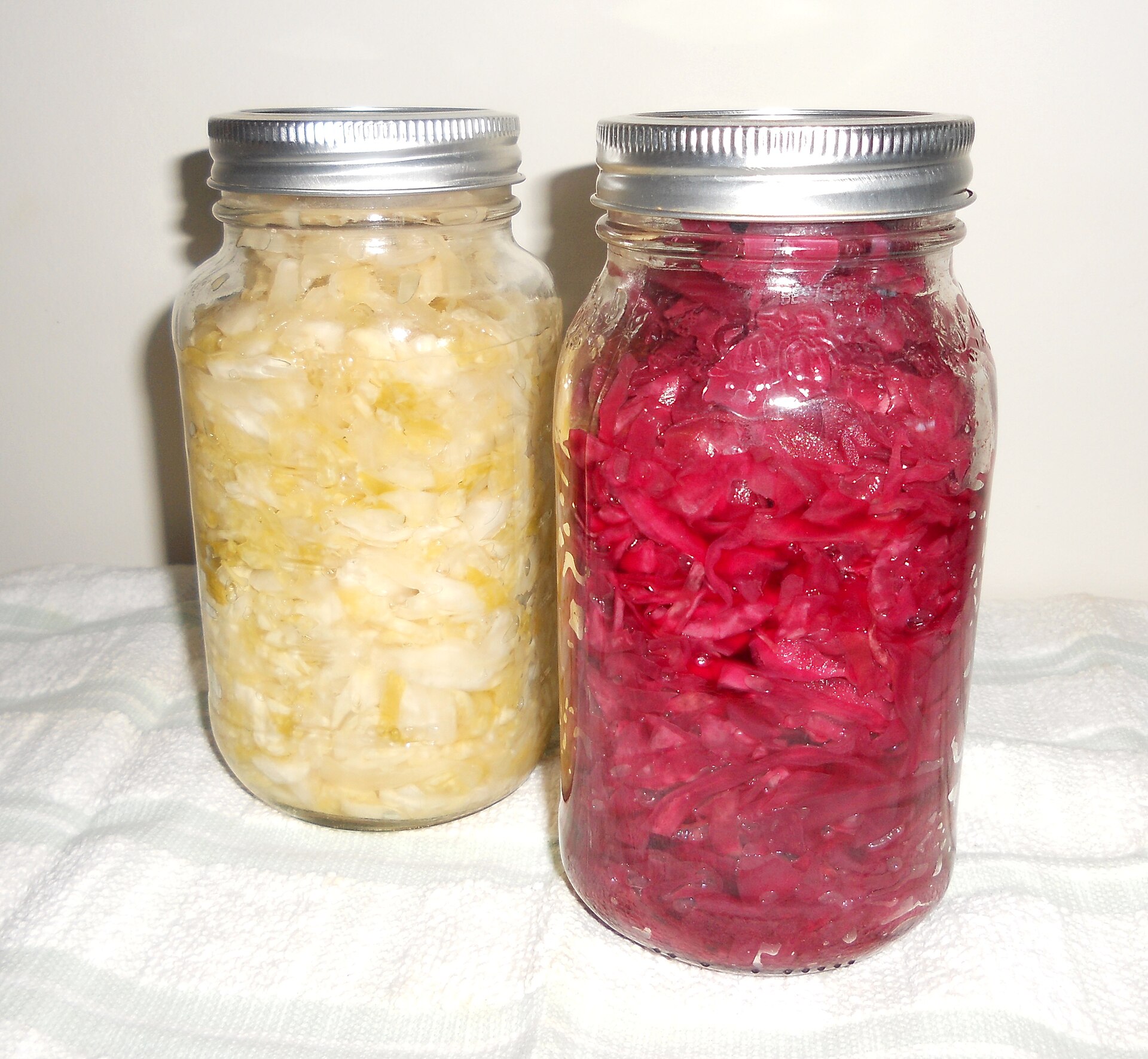
Homemade sauerkraut takes just two ingredients, cabbage and salt, and a few weeks of patience. The salt draws water out of the cabbage to make a brine, and natural lactic acid bacteria do the rest. This guide follows the tested National Center for Home Food Preservation (NCHFP) method, with notes for making a small batch in a mason jar.
The salt ratio
Use 3 tablespoons of canning or pickling salt for every 5 pounds of cabbage. That ratio controls which bacteria grow, so measure it carefully and use pure canning salt without iodine or anti-caking agents. A full NCHFP batch is 25 pounds of cabbage and about 1 cup of salt, and makes about 9 quarts.
Equipment
- For a big batch: a crock such as the Kenley 4-litre water-seal crock, with weights
- For a small batch: wide-mouth quart jars with airlock fermentation lids and glass weights
- A sharp knife or mandoline for shredding
- A wooden kraut pounder for packing


Method
- Start within 24 to 48 hours of harvest, with fresh, firm heads of cabbage.
- Work with about 5 pounds at a time. Remove the outer leaves, rinse the heads and drain them.
- Quarter the heads, cut out the cores, and shred the cabbage about ¼ inch thick.
- In a bowl or the crock, mix 5 pounds of shredded cabbage with 3 tablespoons of salt using clean hands. Pack it down firmly until the salt draws out juice.
- Repeat until all the cabbage is in the container. The top of the cabbage should be at least 4 to 5 inches below the rim.
- If the juice does not cover the cabbage, add boiled and cooled brine made with 1½ tablespoons of salt per quart of water.
- Weigh the cabbage down under the brine with a plate and weights, or glass weights in a jar, and cover with a clean towel or airlock lid.
Fermentation time and temperature
| Temperature | Time to full fermentation |
|---|---|
| 70–75°F (ideal) | About 3 to 4 weeks |
| 60–65°F | About 5 to 6 weeks |
| Below 60°F | May not ferment |
| Above 75°F | May turn soft |
If you use jars of water as weights, check the crock two or three times a week and skim off any scum. With an airlock or a brine-filled bag as the weight, you can leave it undisturbed until bubbling stops.
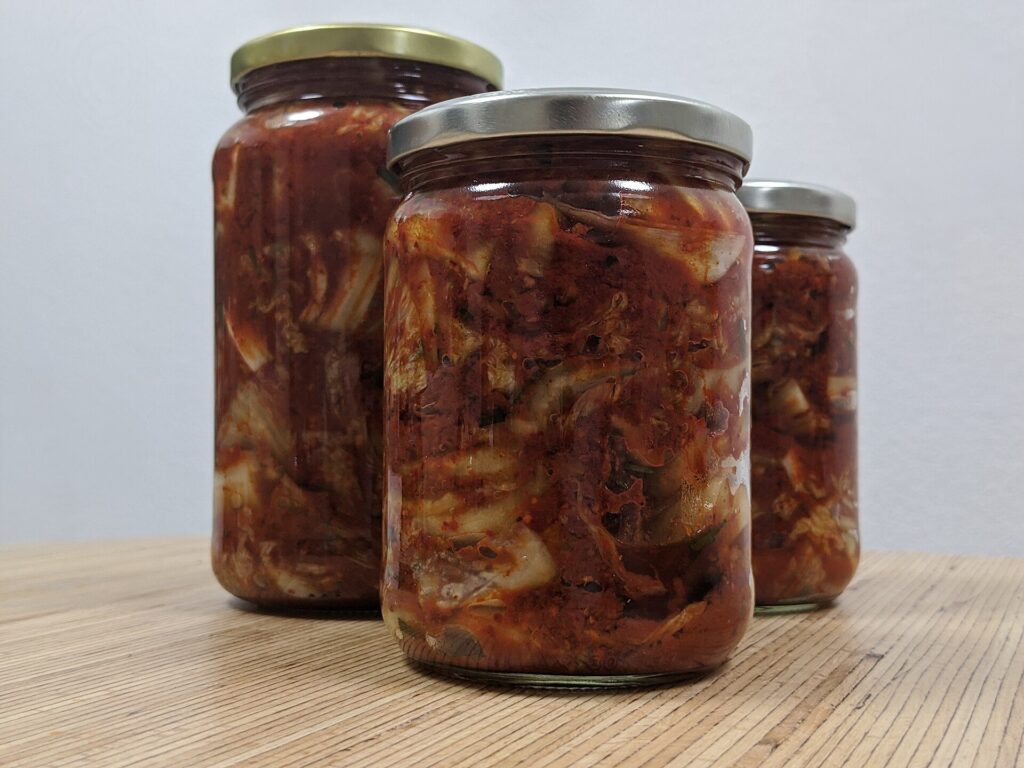

Mason jar sauerkraut (small batch)
For one quart jar, use about 1¾ pounds of cabbage and about 1 tablespoon of canning salt (weigh the cabbage for accuracy), keeping the same ratio. Pack it tightly, press a glass weight on top so the cabbage stays under the brine, and fit an airlock lid. Leave an inch or two of space at the top for bubbling, and set the jar on a plate to catch any overflow.
Storing sauerkraut
Fully fermented kraut keeps for several months tightly covered in the refrigerator. To store it in the pantry, NCHFP gives tested water bath times: hot-packed pints 10 minutes and quarts 15 minutes at up to 1,000 feet. Canning softens the kraut and kills its live bacteria. Our guide to crocks, jars and weights covers equipment in more detail.
Troubleshooting
A flat white film is usually harmless kahm yeast: skim it and keep the cabbage under the brine. Pink color, a slimy texture, a rotten smell or fuzzy mold mean the batch should be thrown out.
Sources
- National Center for Home Food Preservation, Sauerkraut