Some links are affiliate links: as an Amazon Associate we earn from qualifying purchases. See our affiliate disclosure.
If you want to can green beans, corn, carrots, soups, stock or meat at home, you need a pressure canner. These are low-acid foods, and the only safe way to can them is to process the jars at about 240°F, a temperature you can only reach under pressure. A boiling water bath tops out at 212°F, which is not hot enough to destroy the spores that cause botulism. This guide compares the best pressure canners for home use and explains the features that matter for safety.
Quick picks
- Best overall: Presto 01784 23-Quart Induction Compatible Pressure Canner, the familiar Presto design with a stainless-clad base that also works on induction cooktops.
- Best with a weighted regulator: T-fal 22-Quart Pressure Canner, with a three-setting pressure regulator (5, 10 and 15 PSI).
- Digital option (read the caveats): Presto 02153 Precise 23-Quart Digital Pressure Canner.
Pressure canner vs pressure cooker
A pressure cooker and a pressure canner both cook under pressure, but they are not interchangeable for canning. USDA-tested canning processes assume a canner large enough to hold at least four quart jars standing upright on a rack, because the time it takes the canner to heat up and cool down is part of the process. A small pressure cooker or an electric multi-cooker heats and cools much faster, so a tested canning time may not be safe in it. The National Center for Home Food Preservation does not recommend electric multi-cookers such as the Instant Pot for pressure canning.
Dial gauge vs weighted gauge
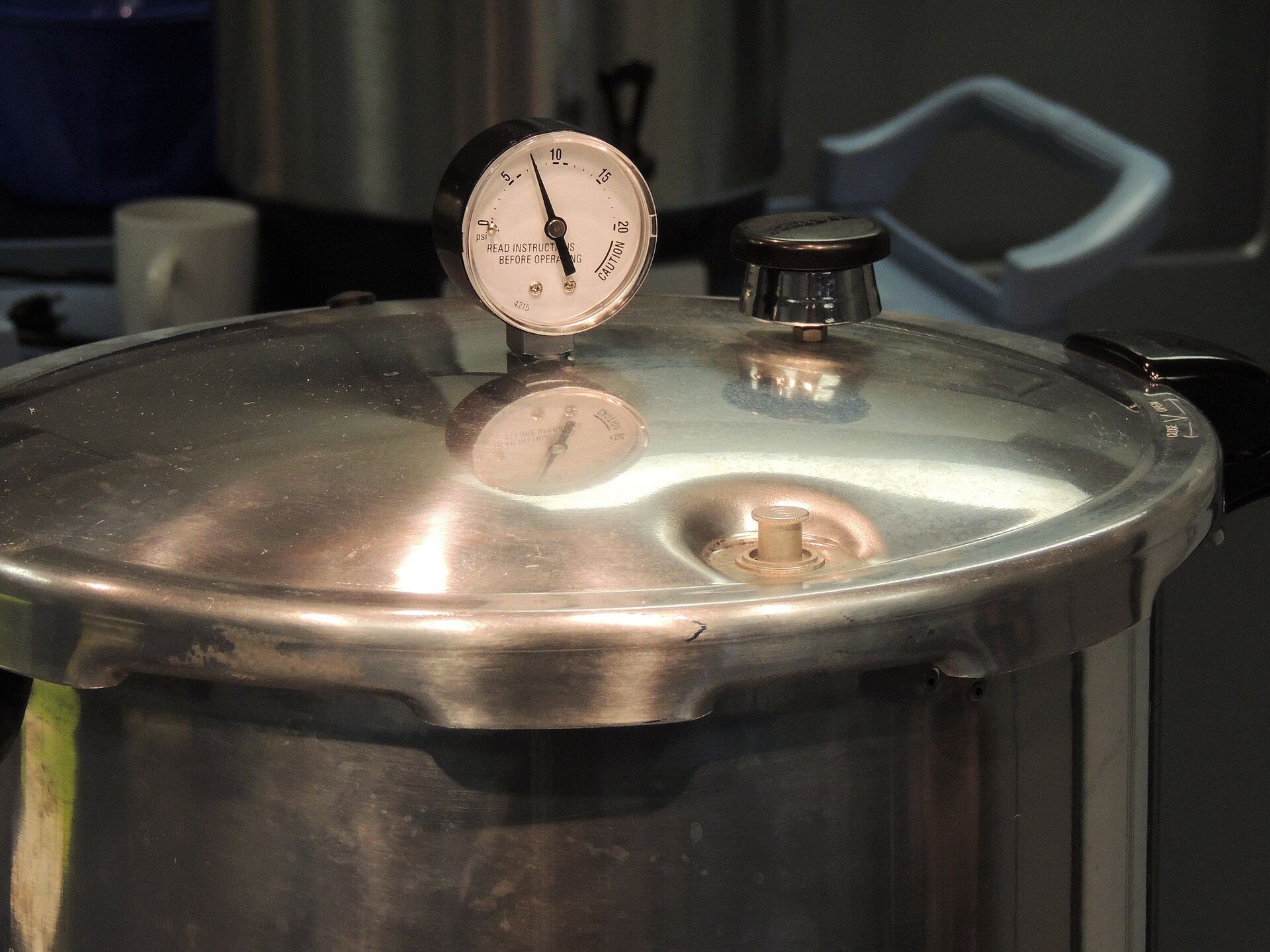
Dial-gauge canners show the pressure on a needle gauge, and you adjust the heat to keep the needle at the right number. They let you see exactly what is happening, but the gauge must be accurate: have it tested every year before canning season (many county extension offices offer testing) and replace it if it reads more than 2 PSI off.
Weighted-gauge canners use a weight that rocks or jiggles when the canner reaches 5, 10 or 15 PSI. They do not need testing and many people find them easier, but they only offer those fixed settings. At altitudes above 1,000 feet, most weighted-gauge processes use 15 PSI.
| Feature | Dial gauge | Weighted gauge |
|---|---|---|
| How you read pressure | Needle on a gauge | Weight rocks or jiggles |
| Annual testing | Yes | No |
| Pressure settings | Any value | 5, 10 or 15 PSI |
| Altitude adjustment | Fine-grained | Usually jump to 15 PSI above 1,000 ft |
The best pressure canners
1. Presto 01784 23-Quart Induction Compatible Pressure Canner
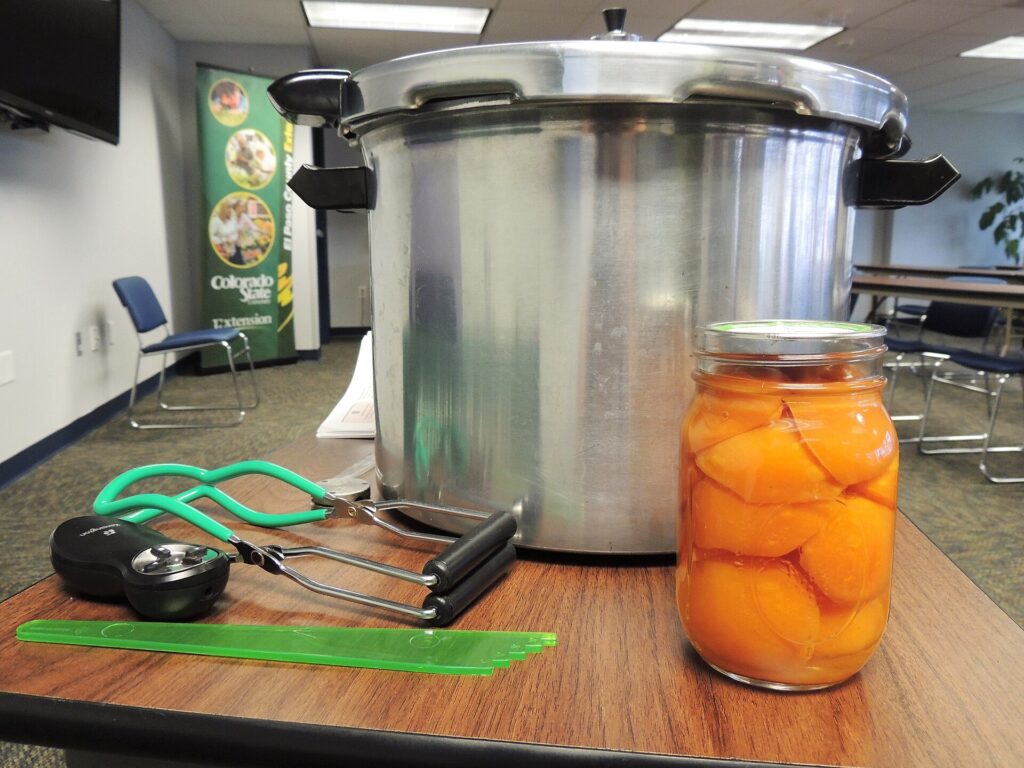

The Presto 01784 is the induction-compatible version of Presto’s popular 23-quart canner. It has a dial gauge, a stainless-steel-clad base that works on gas, electric and induction cooktops, and enough room for a full load of quart jars, or a double layer of pints. It also works as a large boiling water canner when you put up tomatoes and fruit, which makes it a good single purchase for a new canner.
Consider: the dial gauge needs annual testing. The rubber sealing ring and overpressure plug are wear parts; keep spares.
2. T-fal 22-Quart Pressure Canner
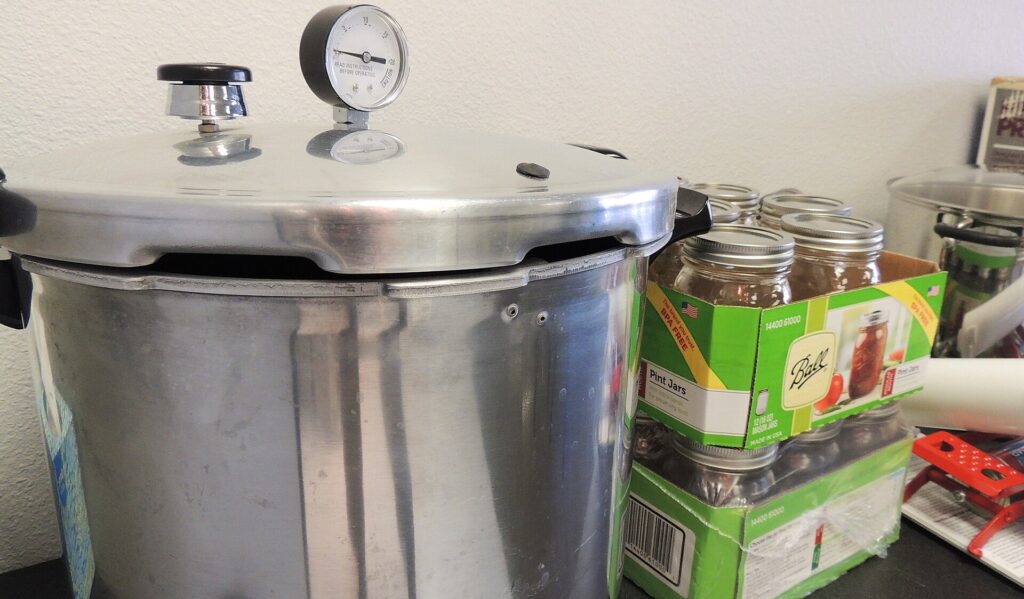

The T-fal 22-quart canner uses a pressure regulator with three settings (5, 10 and 15 PSI), so there is no gauge to test. It is a good fit if you like the set-it-and-listen approach of a weighted regulator. It is aluminum, which heats quickly, and big enough for serious batches of green beans or stock.
Consider: aluminum canners are not induction compatible. Check that it fits under your range hood or microwave before you buy.
3. Presto 02153 Precise 23-Quart Digital Pressure Canner
The Presto Precise digital canner is a stovetop canner with an electronic sensor that monitors temperature and tells you when to start and stop timing. Presto says its digital canners use their own tested processes. The National Center for Home Food Preservation has not endorsed electric or digital canning appliances, so read the current NCHFP guidance and follow the manufacturer’s manual exactly if you choose one.
Also worth knowing: All-American canners
All-American canners are heavy cast-aluminum canners with a metal-to-metal seal (no rubber gasket) and both a weighted regulator and a dial gauge. They are expensive and heavy, but many long-time canners consider them a lifetime purchase. Availability on Amazon Canada is patchy, so compare prices before buying.
How to choose a pressure canner
- Capacity: make sure it holds at least four quart jars upright; most families want one that holds seven.
- Cooktop: induction needs a magnetic base; glass-top ranges need a flat bottom and should be approved by the range manufacturer for canning.
- Gauge type: dial for precision, weighted for simplicity.
- Height: tall canners may not fit under a microwave or hood.
- Parts availability: gaskets, overpressure plugs and gauges should be easy to replace.
Safe pressure canning basics
- Use a current, tested recipe from USDA, NCHFP, an extension service or Ball.
- Put the rack and the amount of water the manual specifies in the canner.
- Load filled jars, lock the lid, and vent steam for 10 minutes before adding the weight or closing the petcock.
- Bring the canner up to the required pressure for your altitude, then start timing. If pressure drops below the target, bring it back up and restart the time from zero.
- When time is up, turn off the heat and let the canner depressurize naturally. Never force-cool it.
- Wait 10 minutes after the pressure reaches zero before opening the lid, tilting it away from your face.
See our step-by-step guide to pressure canning green beans for a full worked example with times and pressures, and our canning supplies checklist for the tools you will need.
FAQ
Can I use my Instant Pot to pressure can?
No. The National Center for Home Food Preservation does not recommend electric multi-cookers for pressure canning, because tested canning times have not been established for them.
Can a pressure canner be used as a water bath canner?
Yes. Most large pressure canners can be used as a boiling water canner by leaving the lid unlocked (or the vent open) and covering the jars with water. Check your manual.
How often should a dial gauge be tested?
Every year before canning season, and any time the canner has been dropped. Contact your local extension office about testing.
Related guides: Electric pressure canners · Canning potatoes
Sources
- National Center for Home Food Preservation, Using Pressure Canners
- USDA Complete Guide to Home Canning, Principles of Home Canning