Some links are affiliate links: as an Amazon Associate we earn from qualifying purchases. See our affiliate disclosure.
Home-canned potatoes are a pantry shortcut: open a jar and they are ready to fry, mash or add to soup. Potatoes are a low-acid vegetable, so they must be pressure canned. There is no safe water bath method. This guide follows the tested USDA process for white potatoes, cubed or whole.
What you need
- About 20 pounds of potatoes for 7 quarts, or 13 pounds for 9 pints
- A pressure canner such as the Presto 23-quart; see our pressure canner guide
- Jars with new lids, such as Ball wide-mouth jars
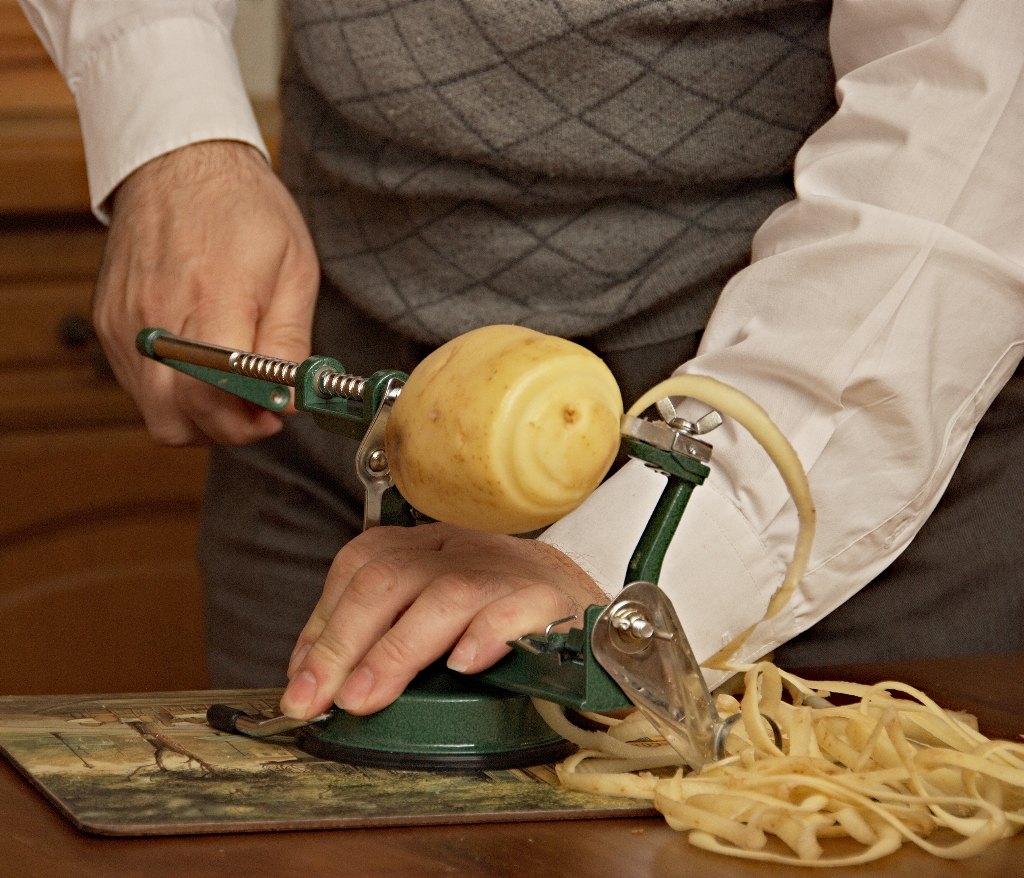
- A peeler. A crank-style apple and potato peeler makes quick work of a canner load.
- Optional: ascorbic acid to keep cut potatoes from darkening, and canning salt

Choosing potatoes
Use small to medium, mature potatoes that are good for cooking. If you want to can them whole, choose potatoes 1 to 2 inches across. Potatoes stored below 45°F may discolor when canned. Waxy and all-purpose potatoes hold their shape better than very starchy russets.
Method
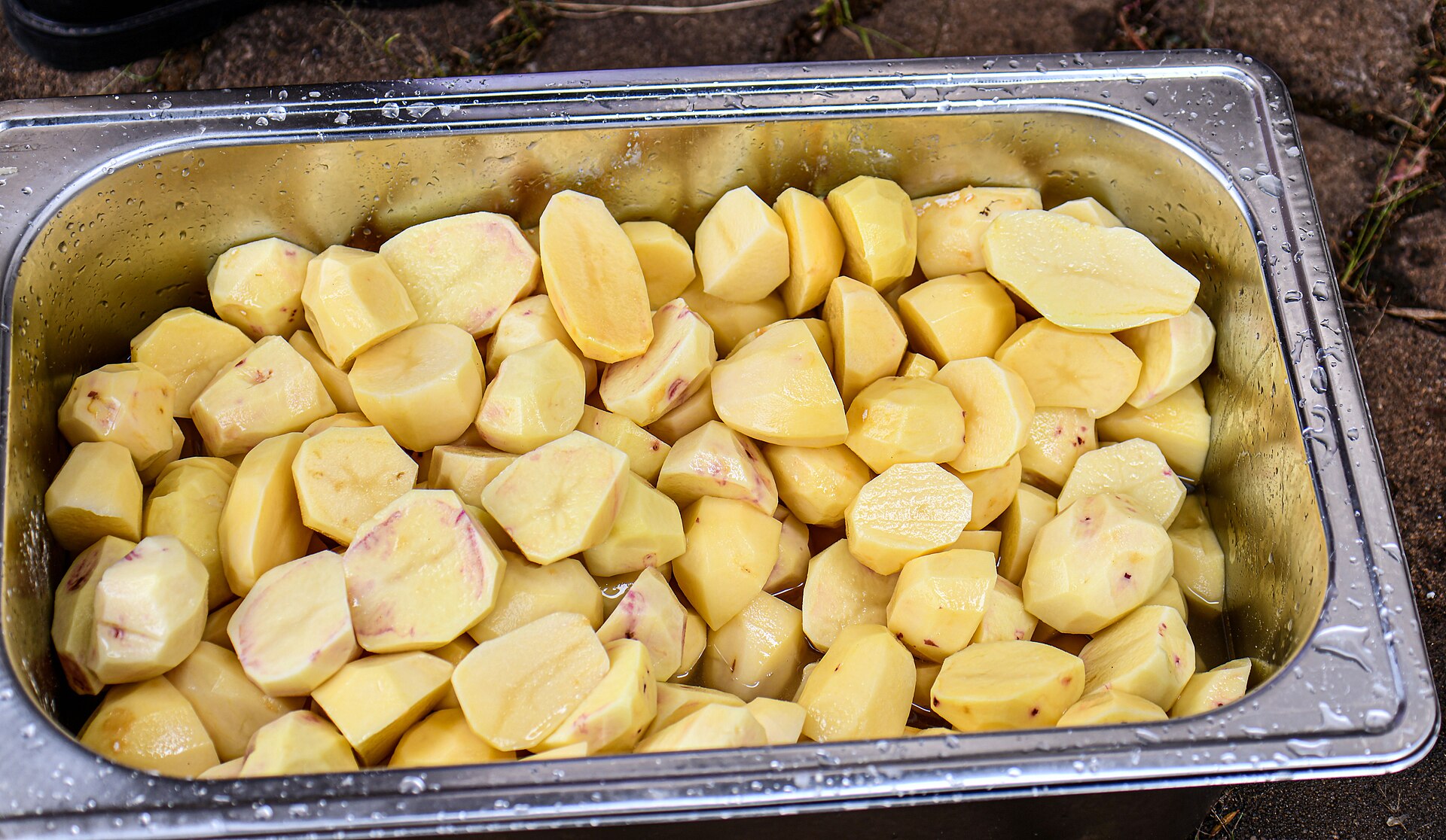
- Wash and peel the potatoes. Process times have not been tested for unpeeled potatoes, so always peel.
- Cut larger potatoes into ½-inch cubes. As you work, drop them into water with ascorbic acid to prevent darkening, then drain.
- Cook the potatoes in boiling water: 2 minutes for cubes, 10 minutes for whole potatoes. Drain.
- Fill hot jars with the hot potatoes, leaving 1 inch of headspace.
- If you like, add ½ teaspoon of salt per pint or 1 teaspoon per quart.
- Cover with fresh boiling water, keeping 1 inch of headspace. Do not use the cooking water, which is starchy.
- Remove air bubbles, wipe the rims, apply lids and bands, and process in a pressure canner.
Processing times and pressures
Process pints for 35 minutes and quarts for 40 minutes. Vent the canner for 10 minutes before bringing it up to pressure.
Weighted-gauge canner
| Jar size | Time | 0–1,000 ft | Above 1,000 ft |
|---|---|---|---|
| Pints | 35 min | 10 lb | 15 lb |
| Quarts | 40 min | 10 lb | 15 lb |
Dial-gauge canner
| Jar size | Time | 0–2,000 ft | 2,001–4,000 ft | 4,001–6,000 ft | 6,001–8,000 ft |
|---|---|---|---|---|---|
| Pints | 35 min | 11 lb | 12 lb | 13 lb | 14 lb |
| Quarts | 40 min | 11 lb | 12 lb | 13 lb | 14 lb |
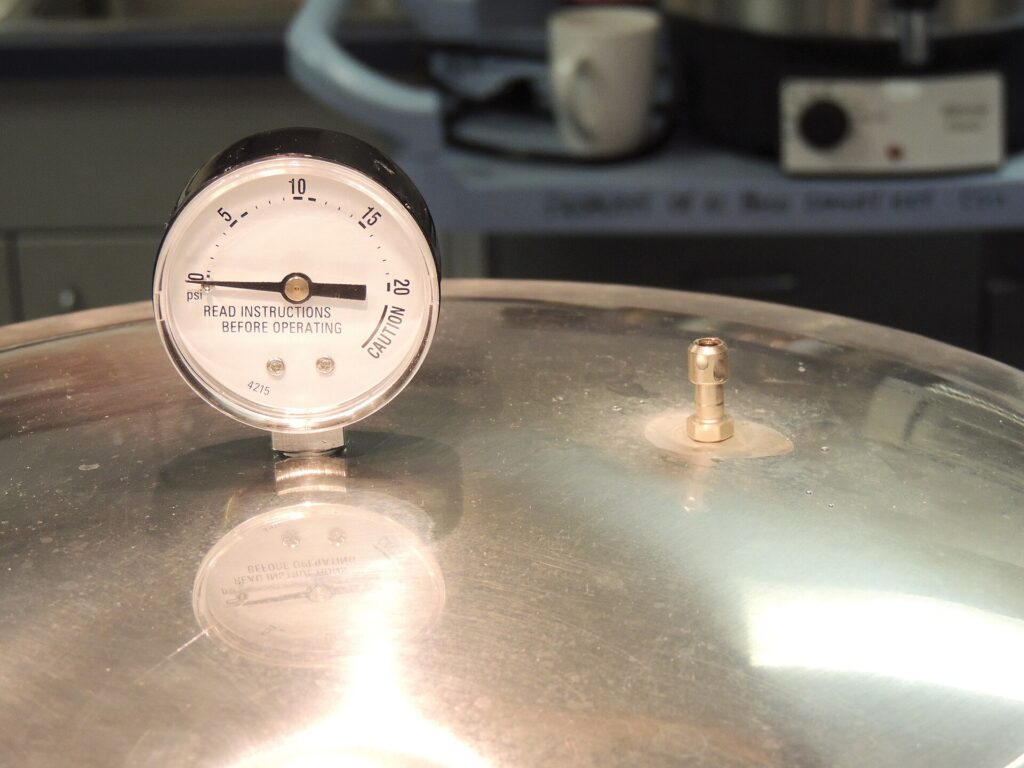

Let the canner cool and depressurize on its own before opening. Leave the jars to cool for 12 to 24 hours and check the seals.
What not to do
- Do not can mashed or puréed potatoes. They are too dense for heat to reach the center safely. Can cubes and mash them after opening.
- Do not add butter, milk or flour to the jars.
- Do not water bath can potatoes, and do not use an electric multi-cooker.
Using canned potatoes
Drain and rinse them, then pan-fry, roast, mash or add them to soups and stews. They are already cooked, so they only need heating through. Sweet potatoes have their own tested process (pieces or whole only), so do not use these times for them.
FAQ
Why are my canned potatoes cloudy?
Starch from the potatoes clouds the water. Rinsing the cubes well and using fresh water instead of cooking water helps. Cloudiness alone is not a safety problem, but discard any jar with a bulging lid, off smell or mold.
Can I can potatoes with the skin on?
No. Tested times are for peeled potatoes only.
Sources
- National Center for Home Food Preservation, Potatoes, White – Cubed or Whole
- Michigan State University Extension, Michigan Fresh: Potatoes