Some links are affiliate links: as an Amazon Associate we earn from qualifying purchases. See our affiliate disclosure.
Homemade beef jerky costs a fraction of store-bought, lets you choose the cut and the seasoning, and is one of the best reasons to own a dehydrator. The one thing most jerky recipes skip is the safety step: a dehydrator alone usually does not heat meat fast enough to kill harmful bacteria. This guide gives you a simple marinade, the method for drying it in a dehydrator, and the USDA-recommended heating step that makes it safe.
What you need
- 2 pounds lean beef: eye of round, top round, bottom round or sirloin tip
- A food dehydrator. The NESCO FD-75A and COSORI 6-tray are our picks; see all our dehydrator picks.
- An instant-read or probe thermometer, such as the TempPro TempSwift
- A sharp knife, cutting board and a large zip-top bag or bowl for marinating
- Optional: a jerky gun for ground-meat jerky
Simple beef jerky marinade
- ½ cup soy sauce
- ¼ cup Worcestershire sauce
- 1 tablespoon brown sugar or honey
- 1 teaspoon garlic powder
- 1 teaspoon onion powder
- 1 teaspoon freshly ground black pepper
- 1 teaspoon smoked paprika
- ½ teaspoon red pepper flakes (optional)
Whisk everything together. This is enough for about 2 pounds of meat.
Step 1: Choose and slice the beef
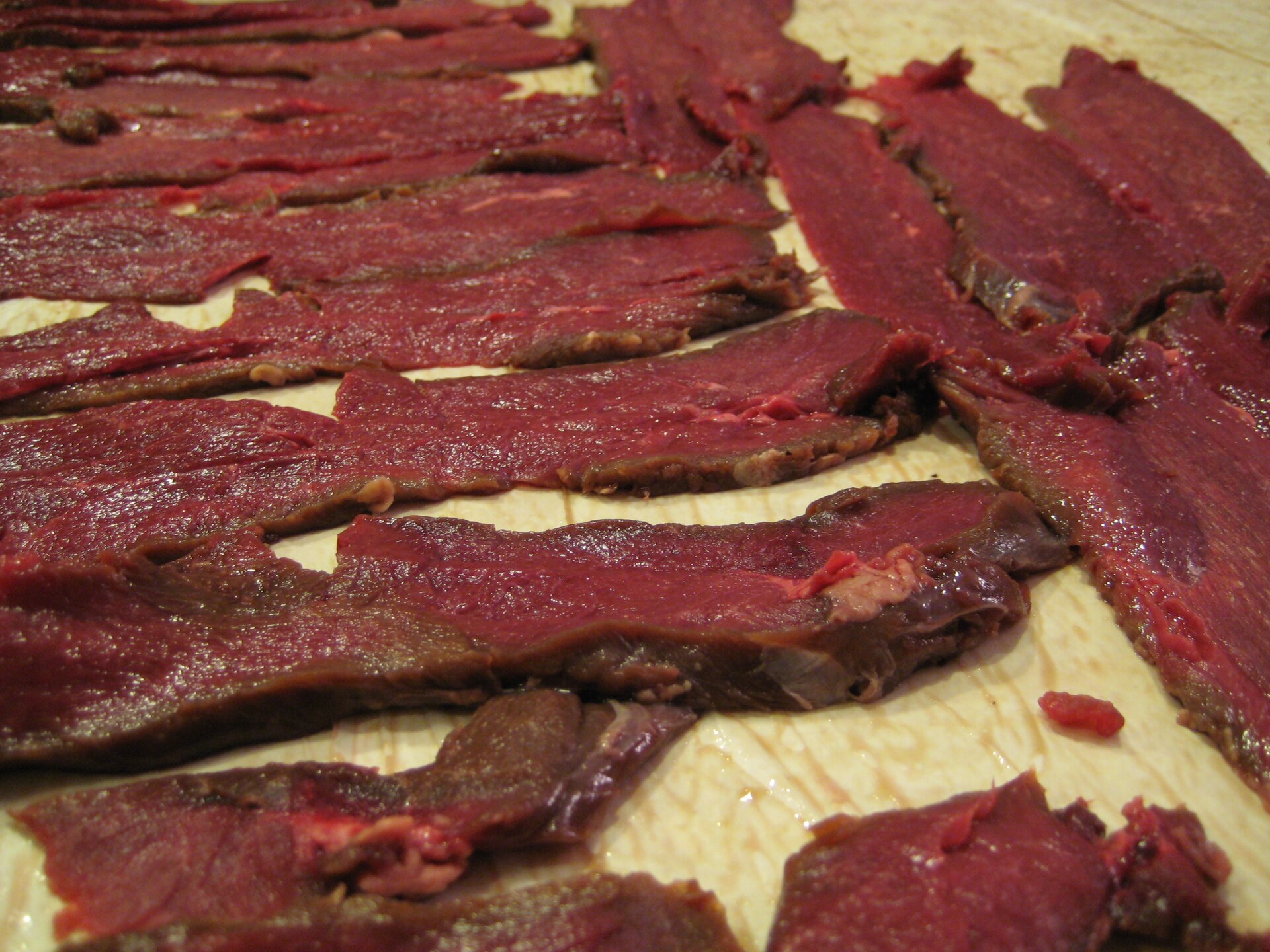
Fat goes rancid and shortens shelf life, so start with the leanest cut you can find and trim off every bit of visible fat. Put the meat in the freezer for 1 to 2 hours until it is firm but not frozen solid; it is much easier to slice evenly. Cut it into strips about ¼ inch thick. Slicing across the grain gives tender jerky; slicing with the grain gives chewier, traditional jerky.
Step 2: Marinate
Put the strips and marinade in a bag or covered bowl in the refrigerator for 6 to 24 hours. Always marinate in the fridge, never on the counter. Do not reuse the marinade.
Step 3: Heat the meat to 160°F
USDA’s Meat and Poultry Hotline recommends heating meat to 160°F (poultry to 165°F) before dehydrating. This is because the low, slow heat of a dehydrator can dry the outside of the meat before it gets hot enough to kill bacteria such as E. coli and Salmonella. There are two tested ways to do it:
- Before drying (USDA): bring the strips and marinade to a boil and simmer, or bake the strips on a rack in the oven, until a thermometer shows 160°F in the thickest strip. Then drain and dry.
- After drying (NCHFP option): dry the jerky first, then put the dried strips on a baking sheet in an oven preheated to 275°F for 10 minutes.
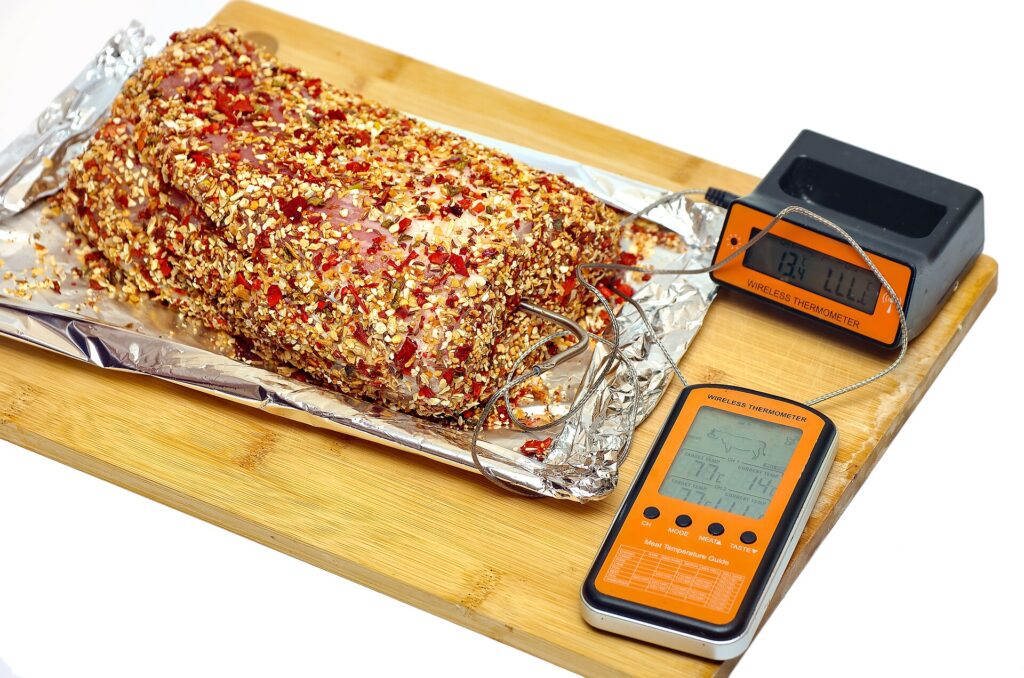

A good instant-read thermometer is the easiest way to check the meat. Precooked strips dry faster and come out a bit more crumbly, which is normal.
Step 4: Dry in the dehydrator
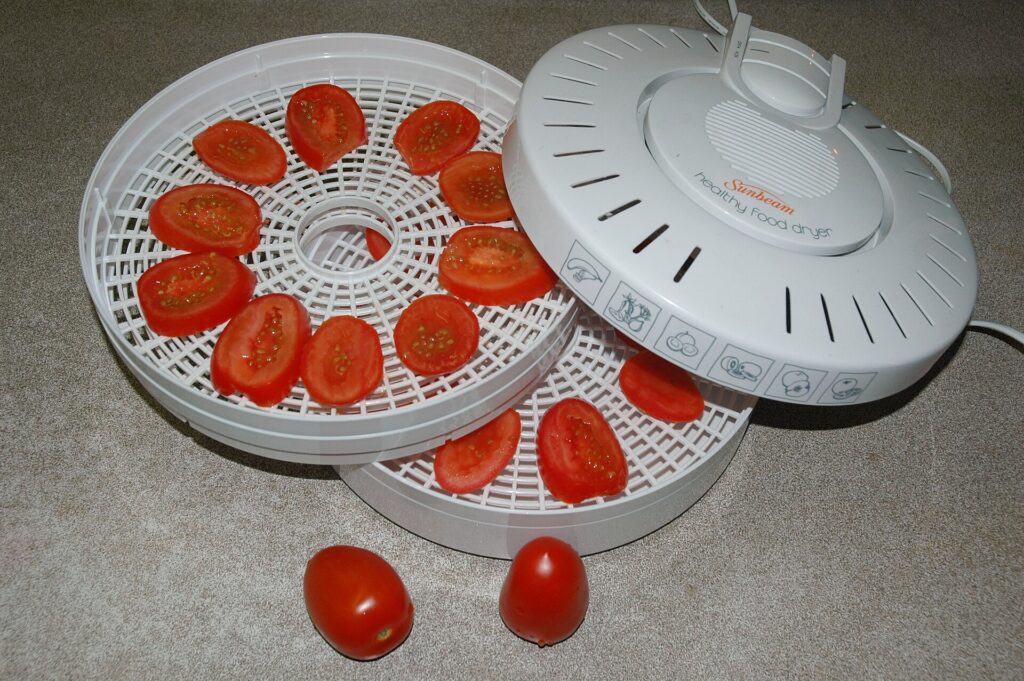

Pat the strips dry with paper towels and lay them flat on the dehydrator trays without touching or overlapping. Set the dehydrator to its jerky setting, usually 145 to 160°F; your dehydrator should hold at least 130–140°F throughout drying. Drying usually takes 4 to 6 hours for precooked strips and longer for raw-dried strips, depending on thickness, humidity and your machine. In a stacking dehydrator like the NESCO FD-75A, rotate the trays every couple of hours for even drying.
Step 5: Test for doneness
Take out a strip and let it cool for 5 minutes. Done jerky bends and cracks but does not snap in half, and there should be no moist spots inside. Blot off any beads of fat with a paper towel.
Step 6: Store it
Let the jerky cool completely, then pack it into airtight jars or bags. Properly dried jerky keeps at room temperature for about 2 weeks in a sealed container. For longer storage, refrigerate or freeze it. Glass canning jars make good jerky containers.
Ground-meat jerky with a jerky gun
A jerky gun presses seasoned ground meat into flat strips or sticks, which is faster than slicing and makes tender jerky. Use very lean ground meat (at least 93% lean), mix in the seasoning and a cure if your recipe calls for one, and follow the same safety step: the strips must reach 160°F. The NESCO Snackmaster Encore kit includes a dehydrator and a jerky gun together.
Flavor variations
- Teriyaki: replace the Worcestershire with teriyaki sauce and add ½ teaspoon ground ginger.
- Sweet and spicy: add 1 tablespoon sriracha and an extra tablespoon of honey.
- Peppered: press coarse black pepper onto the strips after marinating.
- Smoky: add 1 teaspoon liquid smoke.
FAQ
What temperature should I dehydrate jerky at?
Most dehydrators have a jerky setting between 145 and 160°F. The meat itself must reach 160°F (165°F for poultry), either by precooking before drying or heating after drying.
How long does jerky take in a dehydrator?
Usually 4 to 6 hours for ¼-inch strips, but it can take longer. Start checking at 3 hours.
Can I make jerky from venison?
Yes. Wild game jerky needs the same 160°F heating step. Deer and elk can carry parasites, so many guides also recommend freezing the meat first; follow your local extension service’s game guidance.
Related guides: Best vacuum sealers
Sources
- USDA Food Safety and Inspection Service, Jerky and Food Safety
- National Center for Home Food Preservation, Drying: Jerky