Some links are affiliate links: as an Amazon Associate we earn from qualifying purchases. See our affiliate disclosure.
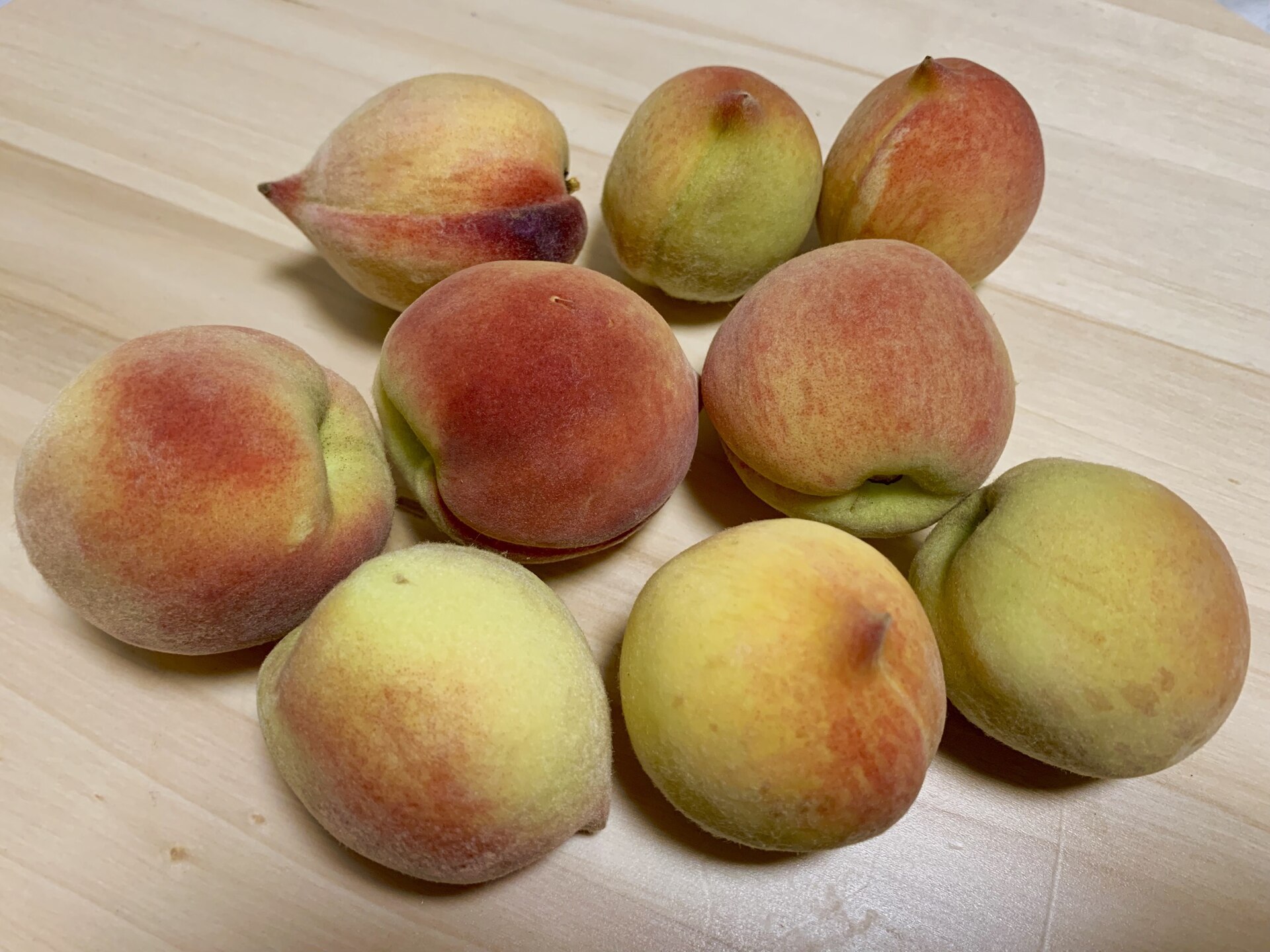
Peaches are one of the most rewarding fruits to can: a jar of local peaches in February tastes like August. Yellow peaches are acidic enough for a boiling water bath, so you only need basic canning equipment. This guide follows the tested USDA and National Center for Home Food Preservation (NCHFP) method for halved or sliced peaches, with syrup options from very light to heavy.
Important: use yellow peaches
Only can yellow-fleshed peaches with this method. Some white-fleshed peach varieties are lower in acid, and there is currently no tested canning process for them. Freeze or dry white peaches instead; our food dehydrator guide covers drying.
What you need
- Ripe, firm yellow peaches: about 17½ pounds for 7 quarts or 11 pounds for 9 pints (roughly 2 to 3 pounds per quart)
- Sugar for syrup (optional), or apple juice or white grape juice
- A water bath canner with a rack, such as the Starfrit canning stockpot
- Canning jars with new lids and bands. Wide-mouth jars make packing halves much easier.
- A jar lifter, funnel and headspace tool (full checklist)
- Ascorbic acid or a commercial anti-browning product to keep the fruit from darkening
Step 1: Make the syrup
Peaches can be packed in water, juice or sugar syrup. Syrup helps the fruit keep its color, shape and flavor, but it is not needed for safety. Heat the water and sugar until the sugar dissolves, and keep the syrup hot. These amounts make enough for a load of 9 pints:
| Syrup | Water | Sugar |
|---|---|---|
| Very light | 6½ cups | ¾ cup |
| Light | 5¾ cups | 1½ cups |
| Medium | 5¼ cups | 2¼ cups |
| Heavy | 5 cups | 3¼ cups |
Light or very light syrup is plenty for ripe, sweet local peaches.
Step 2: Peel, pit and slice
Dip the peaches in boiling water for 30 to 60 seconds until the skins loosen, then plunge them into cold water and slip off the skins. Cut them in half, remove the pits, and slice if you like. To keep them from browning while you work, drop the cut fruit into a solution of ascorbic acid and water (follow the product label), then drain before packing.
Step 3: Pack the jars
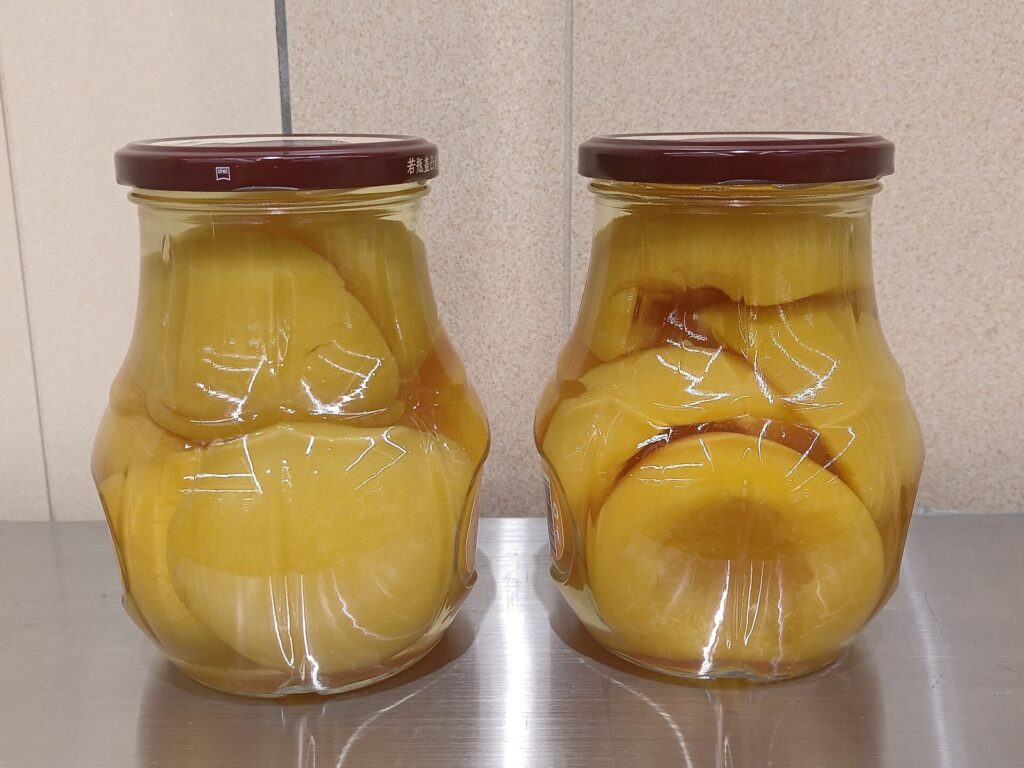

Hot pack (best quality): put the drained peaches into the hot syrup, water or juice and bring to a boil. Fill hot jars with the hot fruit and liquid, placing halves in layers, cut side down, and leave ½ inch of headspace.
Raw pack: fill hot jars with raw peaches, cut side down, and cover with hot syrup, water or juice, leaving ½ inch of headspace. Raw-packed peaches tend to float and lose color, which is why NCHFP notes that hot packs give better quality.
Remove air bubbles, wipe the rims, and apply the lids and bands fingertip tight.
Step 4: Process in a boiling water canner
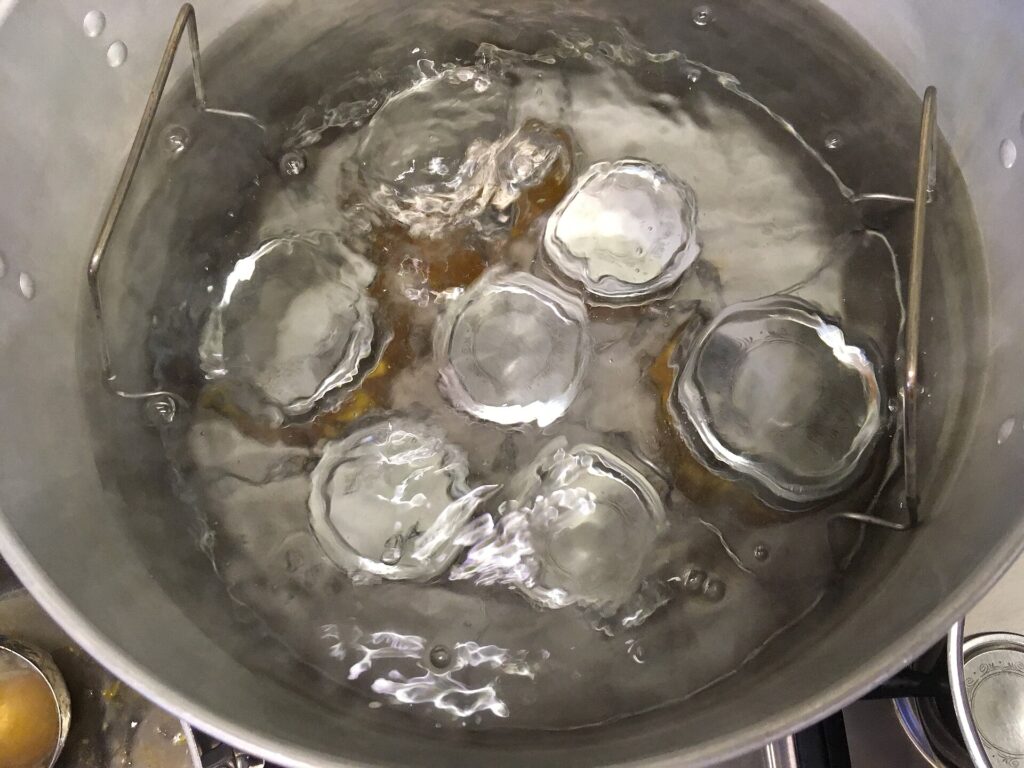

Set the jars on the rack in the canner, make sure they are covered by at least 1 inch of water, bring to a full rolling boil, then start timing.
| Pack | Jar size | 0–1,000 ft | 1,001–3,000 ft | 3,001–6,000 ft | Above 6,000 ft |
|---|---|---|---|---|---|
| Hot | Pints | 20 min | 25 min | 30 min | 35 min |
| Hot | Quarts | 25 min | 30 min | 35 min | 40 min |
| Raw | Pints | 25 min | 30 min | 35 min | 40 min |
| Raw | Quarts | 30 min | 35 min | 40 min | 45 min |
Step 5: Cool and store
When time is up, turn off the heat, take off the canner lid and wait 5 minutes, then lift the jars out with a jar lifter. Cool them on a towel for 12 to 24 hours, then check that every lid is sealed. Refrigerate any jars that did not seal. Store sealed jars without the bands in a cool, dark place and use them within a year.
Pressure canning option
NCHFP also gives a short pressure canning process for peaches, which some people prefer for firmer fruit. If you have a pressure canner, see our pressure canner guide and follow the NCHFP table for your gauge type and altitude.
Troubleshooting
- Peaches darkened at the top of the jar: too much headspace, air bubbles left in, or fruit not covered by liquid.
- Fruit floating: common with raw packs and heavy syrup; hot packing reduces it.
- Pink or blue color: a natural reaction in some fruit and not a safety issue.
- Lids did not seal: check for food on the rim, chipped jars, or bands that were too tight or too loose.
FAQ
Can I can peaches without sugar?
Yes. Pack them in water, apple juice or white grape juice. The processing time is the same.
Do I need to sterilize the jars?
No. The processing times are over 10 minutes, so clean hot jars are fine. See when to sterilize jars.
Can I use the same method for nectarines?
NCHFP uses the same process for yellow nectarines as for yellow peaches. White-fleshed nectarines should be frozen or dried instead.
Related guides: Canning pears · Canning applesauce
Sources
- National Center for Home Food Preservation, Peaches, Halved or Sliced
- Oregon State University Extension, Canning Peaches