Updated November 2026. Some links are affiliate links: as an Amazon Associate we earn from qualifying purchases. See our affiliate disclosure.
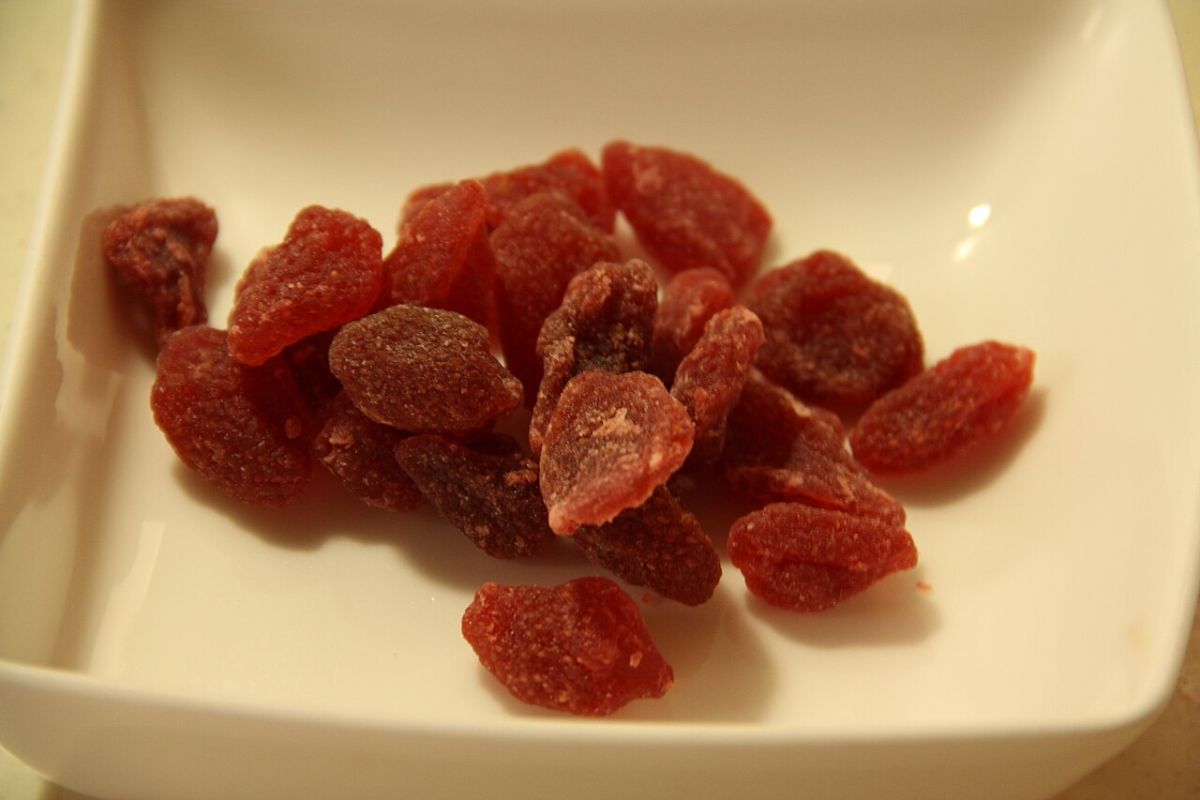
Dehydrated strawberries are one of the best ways to capture a short, local strawberry season. They are sweet, chewy, intensely flavoured and keep for months in a jar, ready for granola, trail mix, baking or just snacking. Unlike jam, they need no added sugar, and unlike freezing, they take up very little space.
This guide shows you how to dehydrate strawberries in a food dehydrator or oven, following university extension guidance on preparation, temperature, doneness and storage. It also covers what to do with them, how they differ from freeze-dried strawberries, and which dehydrators are worth considering.
What you need
- Ripe, firm strawberries (local and in season if you can)
- A sharp knife or egg slicer, and a cutting board
- A food dehydrator, or an oven that holds a low temperature
- Airtight glass jars for conditioning and storage
- Optional: oxygen absorbers or a vacuum sealer for long storage
Choosing strawberries for drying
Penn State Extension recommends firm, ripe, uniformly coloured berries with good flavour. Overripe or bruised berries go mushy and dry unevenly, and underripe berries dry sour and pale. Small and medium berries are easiest to slice evenly. Dry them within a day or two of picking, since strawberries deteriorate quickly.
How to dehydrate strawberries in a dehydrator
- Wash and hull. Rinse the berries gently in cool water, drain well, then remove the green caps.
- Slice evenly. Cut the berries into slices about ¼ inch (6 mm) thick, or halve small berries lengthwise. Even thickness is the key to even drying. An egg slicer works well for medium berries.
- Optional pretreatment. Strawberries don’t need a pretreatment, but University of Minnesota Extension notes that a short dip in an ascorbic acid (vitamin C), citric acid or lemon juice solution can help preserve colour in dried fruit. Drain well afterwards.
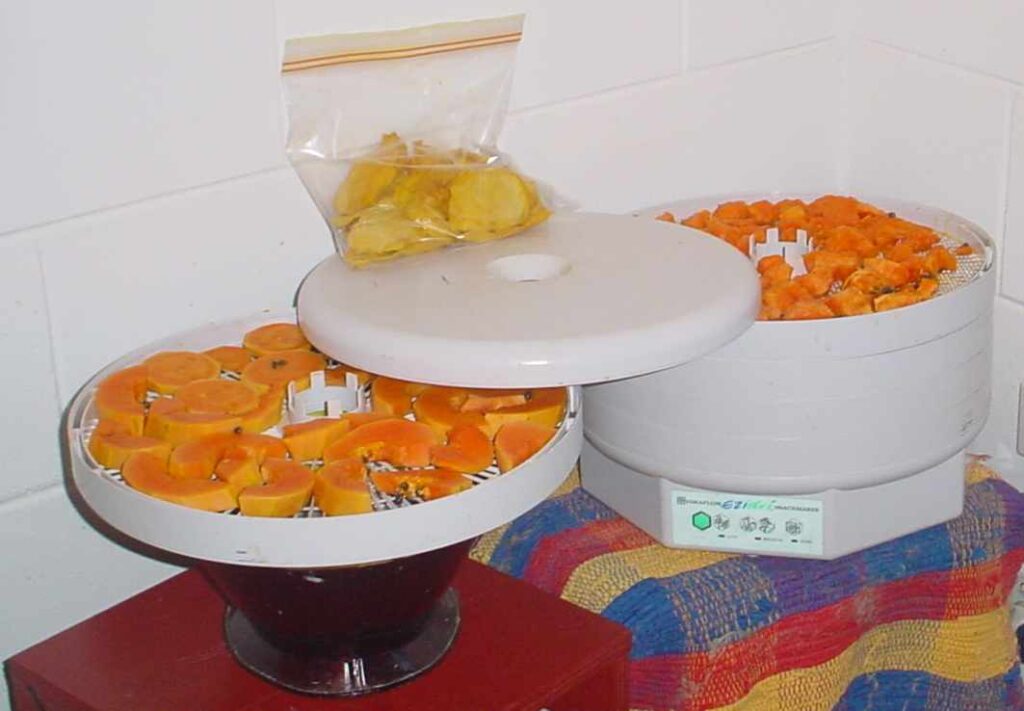
- Arrange on trays. Lay slices in a single layer without overlapping, skin side down for halves. Leave a little space for air to move.
- Dry at 130 to 140°F (54 to 60°C). This is the temperature range Penn State Extension gives for drying strawberries. Higher temperatures can harden the outside before the inside is dry.
- Check and rotate. Drying takes many hours. Thin slices dry much faster than halves, and whole berries can take a day or more. Check every couple of hours toward the end and rotate trays if your dehydrator dries unevenly.
- Test for doneness. Dried strawberries are ready when they are pliable and leathery with no beads of moisture when pressed between your fingers. For crisp “chips”, keep drying until they snap. Let a test piece cool before judging, as fruit feels softer when warm.
- Cool. Let the strawberries cool on the trays for 30 to 60 minutes before packing.

How to dry strawberries in the oven
An oven works if it can hold 140 to 150°F, the range University of Minnesota Extension gives for oven-drying fruit. Many ovens can’t go that low, so check with an oven thermometer.
- Arrange slices on parchment-lined baking sheets or cooling racks set on sheets.
- Prop the door open a few inches so moisture can escape, and use a fan nearby if possible.
- Rotate trays and flip slices every couple of hours.
- Expect oven-drying to take longer and give less even results than a dehydrator. Extension specialists note dehydrators generally give the best quality dried food.
Conditioning: the step most people skip
Even after careful drying, some pieces will hold more moisture than others. Conditioning evens it out and reveals pieces that aren’t dry enough. Penn State Extension recommends packing the cooled fruit loosely in an airtight container for several days, shaking it daily. If you see condensation inside the jar, the fruit needs more time in the dehydrator.
How to store dehydrated strawberries
- Store in airtight glass jars or vacuum-sealed bags in a cool, dark, dry place. University of Minnesota Extension recommends storing dried foods below 60°F.
- Dried foods generally keep 4 to 12 months, according to University of Minnesota Extension, with cooler storage giving longer life. Refrigerating or freezing extends shelf life further.
- For long storage, add a food-grade oxygen absorber to each jar, such as these HomArtist 300cc oxygen absorbers.
- Label jars with the date and check occasionally for moisture or mould. Throw out any jar that shows mould.
- A mason jar vacuum sealer or a chamber vacuum sealer helps keep air and humidity out.
Dehydrated vs freeze-dried strawberries
These are often confused. Dehydrated strawberries are dried with warm moving air, which shrinks them and gives a chewy or crisp texture and concentrated flavour. Freeze-dried strawberries are frozen and dried under vacuum, so they keep their shape and become very light and crunchy, and they dissolve easily into smoothies. Freeze dryers cost far more than dehydrators. For most home cooks, a dehydrator makes delicious, practical dried strawberries.
Best dehydrators for strawberries
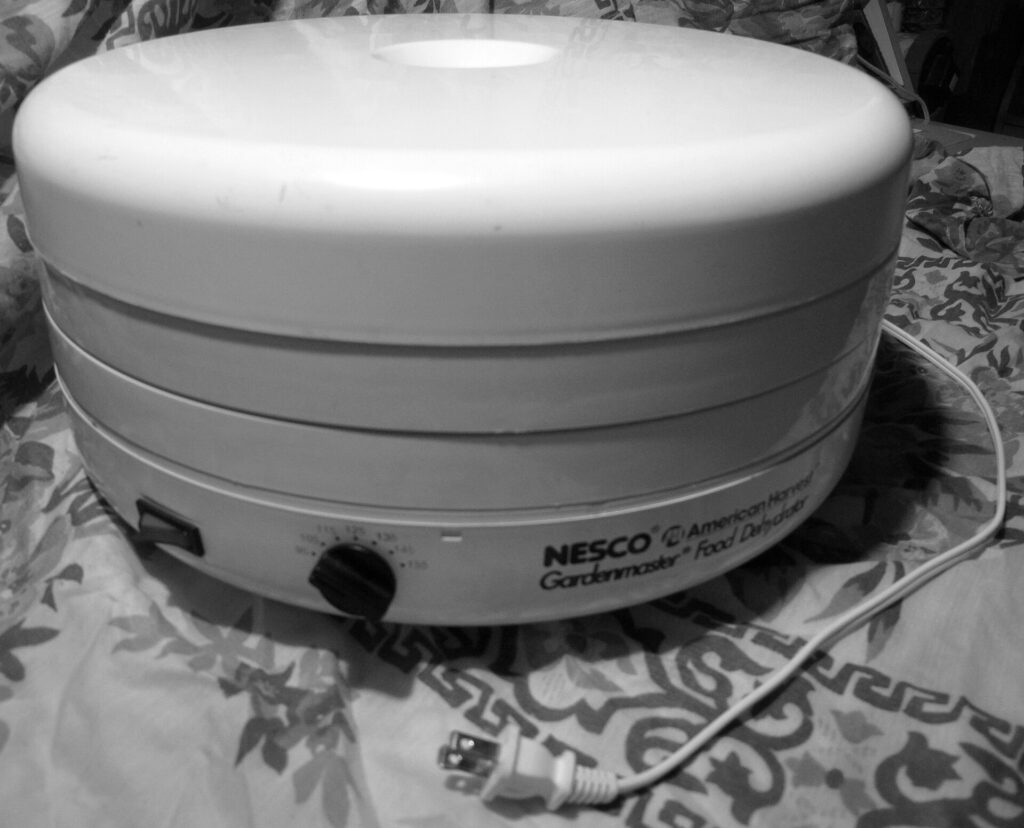
Any dehydrator with an adjustable thermostat that reaches 135 to 140°F will dry strawberries well. These are good options on Amazon.ca; see our full guide to the best food dehydrators for more detail.
| Dehydrator | Style | Trays | Why consider it | |
|---|---|---|---|---|
| [[B07PY5M579 | COSORI 6-tray]] | Box, rear fan | 6 stainless steel | Even airflow, large capacity, 48-hour timer |
| [[B0BQM6JVDK | Magic Mill Pro]] | Box, rear fan | 7 stainless steel | Rear-mounted fan, digital timer and temperature |
| [[B013JL6J7Y | Hamilton Beach 32100C]] | Round, stacking | 5 | Budget, adjustable digital thermostat |
| [[B08BSQZ2LS | Elite Gourmet]] | Round, stacking | 5 BPA-free | Low price, adjustable 95 to 158°F |
Box-style with a rear fan
Box dehydrators like the COSORI 6-tray and Magic Mill Pro blow air horizontally across the trays, so drying is more even and you rarely need to rotate trays. They’re the better choice if you dry a lot of fruit each summer.
Round stacking dehydrators
Round models such as the Hamilton Beach 32100C and Elite Gourmet are cheaper and compact. Air usually moves up through the stack, so you’ll need to rotate trays for even results. They’re a good, low-cost way to start.

Ways to use dehydrated strawberries
- Stir into granola, oatmeal or muesli
- Mix into trail mix with nuts and seeds
- Chop into muffins, scones and cookies
- Blitz into a powder to flavour yogurt, frosting or smoothies
- Rehydrate briefly in warm water or juice for pancakes and desserts
Troubleshooting dried strawberries
| Problem | Likely cause | What to do |
|---|---|---|
| Slices sticking to trays | Juicy berries on bare mesh | Lightly oil the trays, use mesh liners, or loosen slices with a spatula partway through |
| Some pieces still soft | Uneven slicing or crowded trays | Slice more evenly, leave space between slices, return soft pieces to the dehydrator |
| Dark brown colour | Overripe fruit or temperature too high | Use firm berries, keep to 130 to 140°F, try an optional acid dip |
| Hard outside, moist inside | Temperature too high early on (case hardening) | Dry at the lower end of the range and don’t rush |
| Moisture in the jar | Not dry enough | Return to the dehydrator, then condition again |
| Mould during storage | Too much moisture or humid storage | Discard the whole jar; dry more thoroughly next time |
Food safety tips for drying fruit
- Wash your hands, cutting boards, knives and dehydrator trays before you start.
- Use sound, fresh fruit and cut away any bruised or damaged parts; never dry mouldy berries.
- Keep the dehydrator in a clean, dry spot where air can circulate.
- Store dried fruit in clean, dry jars, and keep them out of direct sunlight and away from the stove.
- When in doubt about a jar that smells off or shows mould, throw it out.
Make the most of strawberry season
If you have more berries than you can dry, pair drying with other preserving methods: make a batch of raspberry jam from a tested recipe if you have raspberries too, freeze some whole on a tray for smoothies, and keep a few jars of dried slices for winter baking. Pick-your-own farms and farmers’ markets often have the best prices at the peak of the season, which is the perfect time to fill the dehydrator.
Frequently asked questions
How long does it take to dehydrate strawberries?
It depends on slice thickness, the dehydrator and humidity. Thin slices dry far faster than halves or whole berries. Start checking after several hours and go by texture, not the clock.
What temperature should I dehydrate strawberries at?
Penn State Extension recommends 130 to 140°F (54 to 60°C).
Do I need to pretreat strawberries before drying?
No. A short ascorbic acid or lemon juice dip is optional and mainly helps colour.
How do I know when dried strawberries are done?
They should be leathery and pliable with no beads of moisture when squeezed, or crisp if you’re making chips. Condition them in a jar for several days to check.
Can I dehydrate frozen strawberries?
You can, but thawed berries are soft and juicy, so they’re harder to slice evenly and can turn out darker and softer. Fresh, firm berries give the best results.
Related guides
- Best food dehydrators
- How to make dehydrated apples
- Dehydrated orange slices
- Raspberry jam recipe
- Mason jar vacuum sealers
Sources
- Penn State Extension: Drying Strawberries
- University of Minnesota Extension: Drying fruits and vegetables
- Manufacturer specifications from product listings on Amazon.ca, checked November 2026.
Comments
One response to “How to Make Dehydrated Strawberries (Dehydrator or Oven)”
[…] How to make dehydrated strawberries […]