Updated November 2026. Some links are affiliate links: as an Amazon Associate we earn from qualifying purchases. See our affiliate disclosure.
A mason jar vacuum sealer pulls the air out of a canning jar so the lid is held down by vacuum. It’s a handy, reusable way to keep dehydrated fruit, jerky, dried herbs, flour, coffee, nuts and crackers fresher for longer, and to keep leftovers and prepped food fresh in the fridge. But there is one thing every buyer needs to know up front: vacuum sealing a jar is not canning. This guide explains what jar sealers can and can’t do safely, then compares the best FoodSaver attachments, electric jar sealers and manual pump kits.
Important: a jar vacuum sealer does not make food shelf-stable
Food safety specialists at the University of Minnesota Extension warn that some jar-sealer marketing can suggest these gadgets replace canning. They don’t. Canning heats food in the sealed jar (to at least 212°F in a boiling water bath, and 240–250°F in a pressure canner) to destroy pathogens and form a true hermetic seal. A jar vacuum sealer applies no heat, and because the lid’s sealing compound is not heated, the seal may not even be airtight. Filling jars with hot food and then vacuum sealing them is also not a safe process.
Removing oxygen also does not protect against Clostridium botulinum, which grows without oxygen in moist, low-acid food. So use a jar sealer for two things only:
- Dry, shelf-stable foods that don’t need refrigeration anyway: dehydrated fruit and vegetables, dried herbs and spices, dry grains, beans, pasta, cereal, flour, nuts and seeds, coffee, crackers.
- Refrigerated or frozen foods, which must stay in the fridge or freezer after sealing: soups, sauces, broths, salsas, quick pickles, cut fruit and vegetables, salad jars, cooked leftovers.
If you want shelf-stable jars of tomatoes, beans, jam or pickles, use a tested recipe and a water bath canner or pressure canner instead.
Quick picks
- Best if you already own a FoodSaver: FoodSaver wide- and regular-mouth jar sealer kit
- Best standalone electric jar sealer: UNERVER electric mason jar vacuum sealer
- Electric sealer with LED display: OXLIMKEE electric jar sealer kit
- Compact electric alternative: Mason Genie electric jar sealer
- Best no-electricity option: FORJARS manual pump jar sealer kit
- Best countertop sealer that also does jars: FoodSaver V4400 2-in-1
- Jars to use: Ball wide-mouth quart jars
Comparison table
| Sealer | Type | Jar sizes | Power | Amazon rating* |
|---|---|---|---|---|
| FoodSaver jar sealer kit | Attachment + hose | Regular and wide mouth | Needs a compatible FoodSaver | 4.4 (23K) |
| UNERVER | Electric, handheld | Regular and wide mouth | Rechargeable | 4.3 (8.6K) |
| OXLIMKEE | Electric, LED display | Regular and wide mouth | Rechargeable | 4.4 (6.1K) |
| Mason Genie | Electric | Regular and wide mouth | Electric | 4.4 (385) |
| FORJARS | Manual pump kit | Regular and wide mouth | None | 4.6 (266) |
| FoodSaver V4400 | Countertop bag sealer | With jar accessory | Mains | 4.5 (10.8K) |
*Ratings and review counts as shown on Amazon.ca in November 2026.
The best mason jar vacuum sealers
FoodSaver jar sealer kit: best if you already own a FoodSaver
This is the original and still the most popular option, with more than 23,000 ratings. The kit includes a regular-mouth and a wide-mouth sealer cap plus an accessory hose. You put the lid on the jar, press the sealer cap over it, connect the hose to your FoodSaver’s accessory port and run the accessory function. It’s dishwasher safe and BPA free. If you already own a FoodSaver with an accessory port, it’s by far the cheapest way to start sealing jars.
Limitations: it does nothing without a compatible FoodSaver machine, so check your model before buying. See the FoodSaver jar sealer on Amazon.
UNERVER electric jar sealer: best standalone
Cordless, rechargeable jar sealers like UNERVER’s have become hugely popular because you don’t need a bag sealer at all. You place the unit over the lid, press the button, and it pumps out the air and switches off. The kit fits both regular- and wide-mouth jars and has thousands of ratings.
Limitations: small battery-powered pumps are slower than a countertop machine, and you’ll need to recharge after a big batch. See the UNERVER jar sealer on Amazon.
OXLIMKEE electric jar sealer: best with a display
OXLIMKEE’s kit adds an LED display and one-button operation; the maker says each jar seals in about 40 seconds and the battery fully charges in roughly two hours. It’s a good option if you like to see the vacuum progress.
See the OXLIMKEE jar sealer on Amazon.
Mason Genie: compact electric alternative
Mason Genie makes a well-reviewed electric jar sealer kit for regular- and wide-mouth jars. It has far fewer ratings than the UNERVER, but they are strong.
See the Mason Genie on Amazon.
FORJARS manual pump kit: best without electricity
If you’d rather not have another rechargeable gadget, a hand pump does the same job with a little effort. The FORJARS kit includes a manual pump, a regulator cap with a wide-mouth sealer, a regular-mouth sealer, and six each of regular- and wide-mouth plastic storage lids. It’s great for camp kitchens and off-grid pantries.
See the FORJARS kit on Amazon.
FoodSaver V4400: best countertop sealer to pair with a jar kit
If you also want to vacuum seal bags of meat, fish and vegetables for the freezer, a countertop machine plus the jar kit covers both. The V4400 is a long-time best seller with automatic bag detection and a built-in retractable handheld sealer. Before buying the jar kit, check that its compatibility list includes your FoodSaver model. Read our full best vacuum sealer guide for more options.
See the FoodSaver V4400 on Amazon.

Jar sealer or bag sealer?
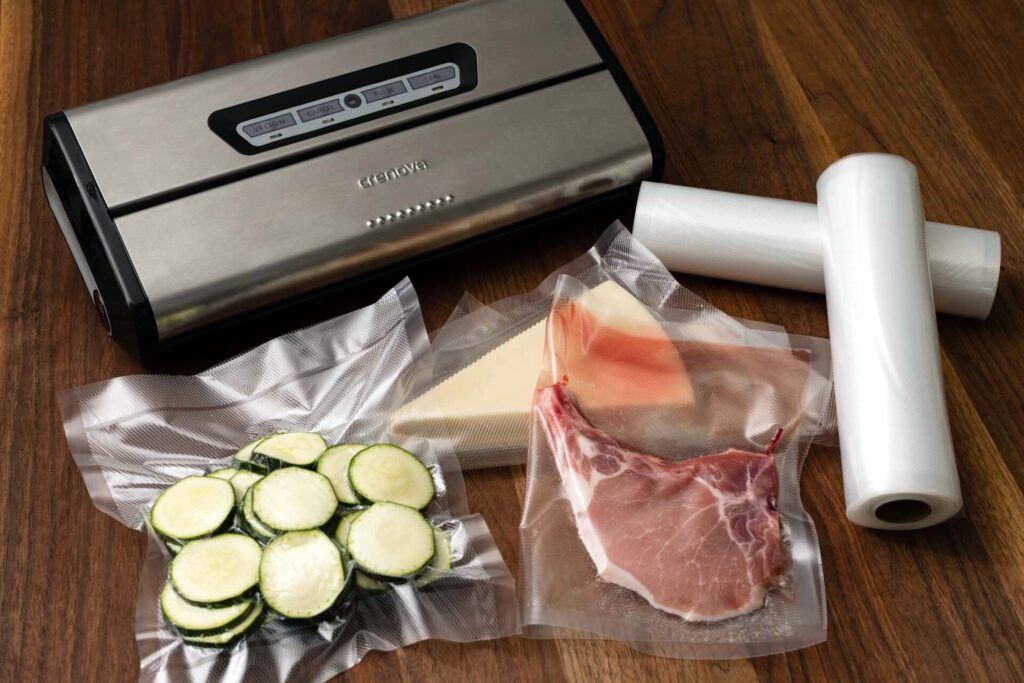
Bags are best for the freezer: they take up less space, mould around meat and fish, and prevent freezer burn. Jars are best for the pantry and fridge: they are reusable, protect crushable food, keep out pests, let you open and re-seal as you use the contents, and avoid single-use plastic bags. Many home food preservers use both: a countertop sealer for freezer bags and a jar attachment or electric jar sealer for dried goods and fridge storage.
How to vacuum seal a mason jar
- Use clean, completely dry jars and dry food. Leave about an inch of space at the top.
- Wipe the rim clean so nothing interferes with the seal.
- Put a flat canning lid on the jar (no band). Lids that have already been used for canning are generally fine for vacuum storage, as long as they are not bent or damaged; they must never be reused for canning.
- Place the jar sealer cap over the lid and run the sealer until it stops.
- Remove the sealer and press the centre of the lid. If it doesn’t flex, the vacuum has held. Screw on the band loosely to protect the lid.
- Label the jar with contents and date. Refrigerate or freeze anything that is not a dry, shelf-stable food.
Tips for better seals
- Wide-mouth jars usually seal more easily than regular-mouth jars with most kits.
- If a lid won’t seal, stack two lids, or try a new lid; worn sealing compound is the usual culprit.
- Powdery foods such as flour can be pulled into the sealer. Place a coffee filter or a square of paper towel on top of the food first.
- Fragile foods like crackers and chips are where jars beat bags: the jar protects them from being crushed.
- Check sealed jars after a few days; if a lid has popped, re-seal it.
Best foods for vacuum-sealed jars
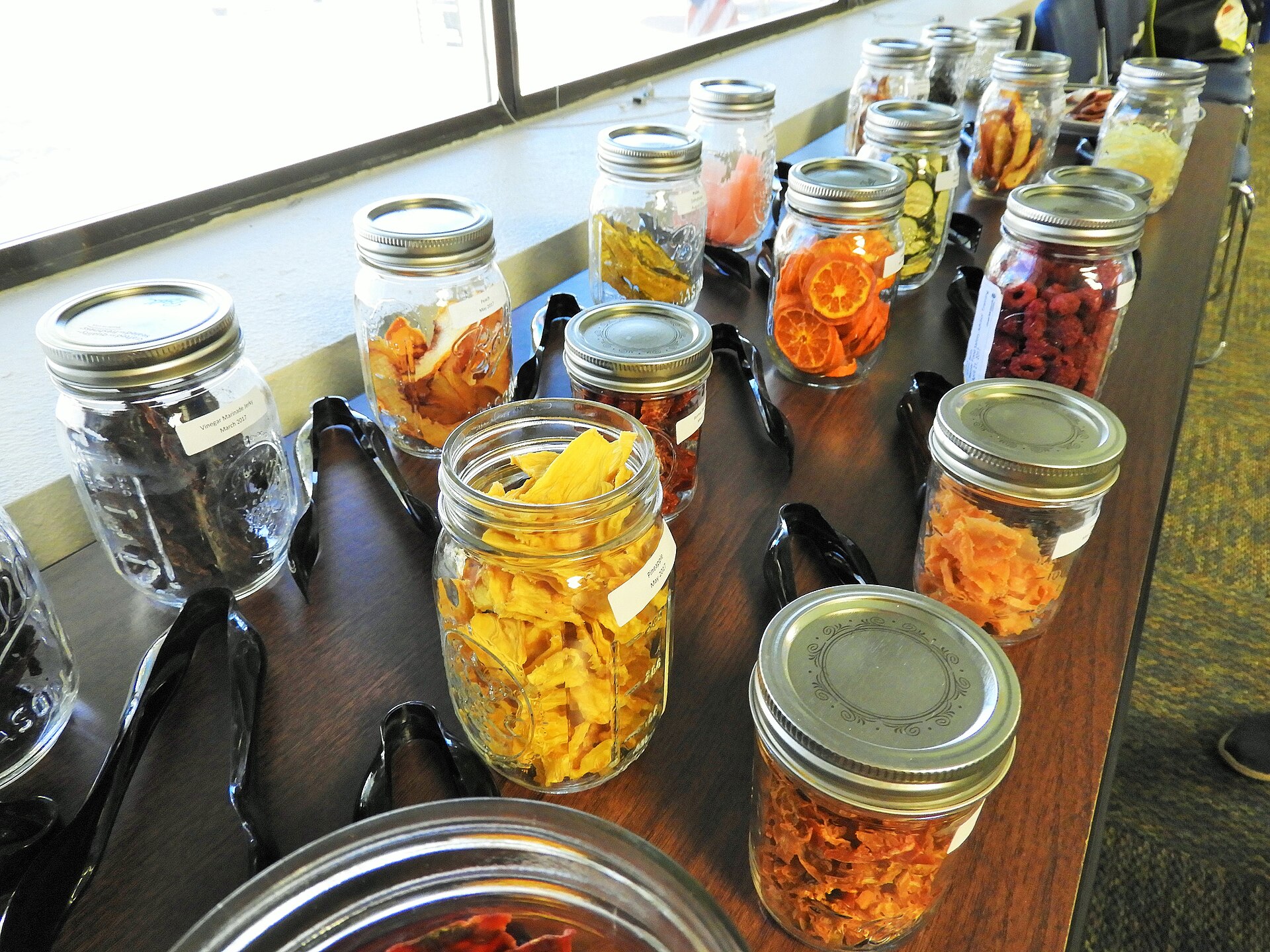
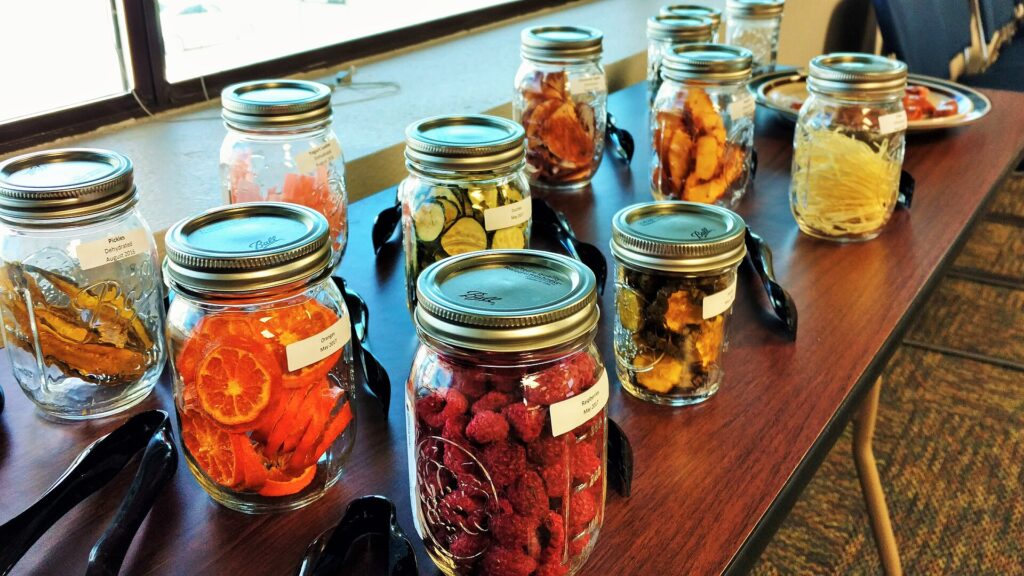
Jar sealing shines with home-dried food. After drying a batch of dehydrated apples, dried orange slices or vegetables in a food dehydrator, condition the pieces, then seal them in jars to keep moisture and oxygen out. Make sure dried food is fully dry and brittle or leathery as the recipe directs; vacuum does not fix under-dried food, and moist food in a low-oxygen jar is exactly what you want to avoid. Homemade jerky keeps best in the fridge or freezer.
Frequently asked questions
Is vacuum sealing mason jars the same as canning?
No. There is no heat treatment, so the food is not sterilised and the seal may not be hermetic. Only dry foods are shelf-stable after jar vacuum sealing; everything else must be refrigerated or frozen.
Can I vacuum seal soup or sauce in mason jars and keep it in the pantry?
No. Moist foods sealed this way must be kept in the fridge or freezer. For shelf-stable soups and sauces, use a tested pressure canning recipe.
How long does vacuum-sealed dry food last in a jar?
Much longer than in an open container, because it is protected from moisture and oxygen. Quality still declines over time, so store jars somewhere cool and dark and use them in rotation.
Do I need special lids?
No. Standard regular- and wide-mouth canning lids work, including used ones. Reusable plastic lids sold with some pump kits work too.
Related guides
Sources
- University of Minnesota Extension: Vacuum-sealing mason jars, are they safe?
- National Center for Home Food Preservation
- Product details from manufacturer listings on Amazon.ca, November 2026