Some links are affiliate links: as an Amazon Associate we earn from qualifying purchases. See our affiliate disclosure.
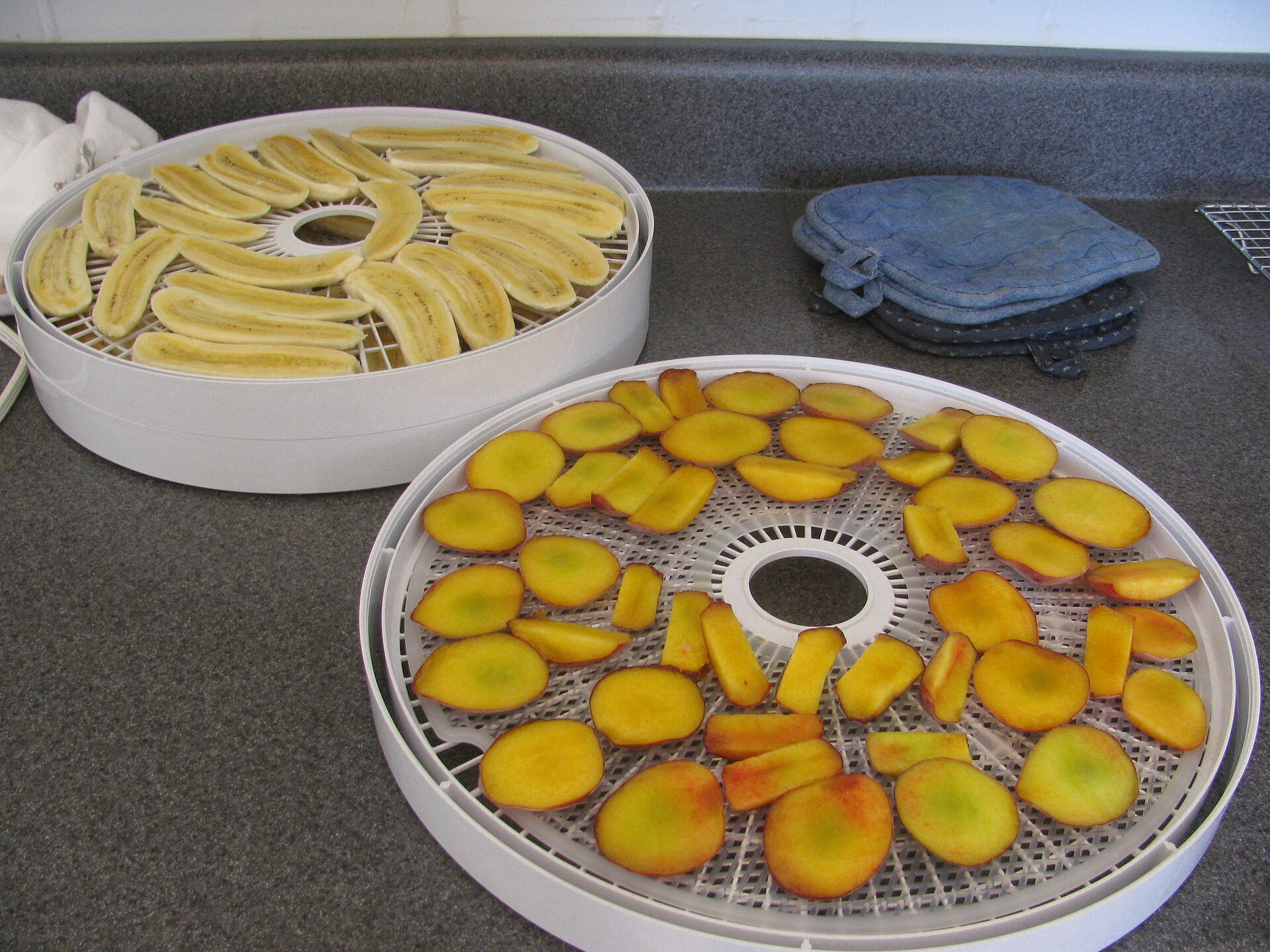
A food dehydrator is the easiest way to turn a glut of local fruit, garden vegetables and herbs into shelf-stable snacks and pantry staples. It runs at low, steady heat with moving air, so you can dry a full load of apple rings, tomatoes or jerky overnight without heating the kitchen or babysitting an oven. This guide compares the best food dehydrators for home preservers, explains the difference between round stacking models and box-style shelf models, and covers what actually matters when you buy one.
Quick picks
- Best overall (box style): COSORI Food Dehydrator with 6 stainless steel trays, a horizontal-airflow machine with a timer and digital temperature control.
- Best value round dehydrator: NESCO FD-75A Snackmaster Pro, a 600-watt stacking model that starts with 5 trays and expands as your harvest grows.
- Best for jerky beginners: NESCO Snackmaster Encore with Jerky Gun Kit, which bundles a dehydrator with a jerky gun and seasoning.
- Most capacity for the money: Magic Mill Pro with 7 stainless steel trays.
- Budget starter: Hamilton Beach 32100C, a simple stacking dehydrator for occasional batches.
Round stacking vs box (shelf) dehydrators
There are two basic designs, and choosing between them is more important than choosing a brand.
Round stacking dehydrators have a fan and heater in the base or lid and a column of trays that stack on top of each other. Air travels vertically through the stack. They are inexpensive, compact to store and easy to expand by buying extra trays. The trade-off is less even drying: trays closest to the fan dry faster, so you will usually rotate the trays partway through a batch. NESCO, Hamilton Beach and most entry-level models use this design.
Box or shelf dehydrators look like a small oven. A rear-mounted fan blows air horizontally across slide-out shelves, which gives more even drying from top to bottom and lets you check one shelf without un-stacking the whole tower. They are better for large batches, thick jerky and anyone who dries food every week. They cost more and take up more counter space. COSORI, Magic Mill and Excalibur make box-style machines.
| Feature | Round stacking | Box / shelf |
|---|---|---|
| Typical price | Lower | Higher |
| Airflow | Vertical, through the stack | Horizontal, across shelves |
| Evenness | Rotate trays for even results | More even without rotating |
| Expandable | Yes, add trays | Fixed number of shelves |
| Storage | Compact | Bulky |
| Best for | Occasional batches, herbs, fruit leather | Weekly use, big harvests, jerky |
The best food dehydrators
1. COSORI Food Dehydrator (6 stainless steel trays)
The COSORI 6-tray dehydrator is the box-style machine we would point most home preservers to first. It has stainless steel trays rather than plastic, a 48-hour timer so it can shut itself off overnight, and digital temperature control so you can dial in the right heat for herbs, fruit or meat. The horizontal airflow means you rarely need to rotate trays. It is a good fit if you dry food regularly and want something that is easy to load, clean and monitor.
Consider: box machines are bulkier than round stackers, and six trays is a fixed capacity.
2. NESCO FD-75A Snackmaster Pro
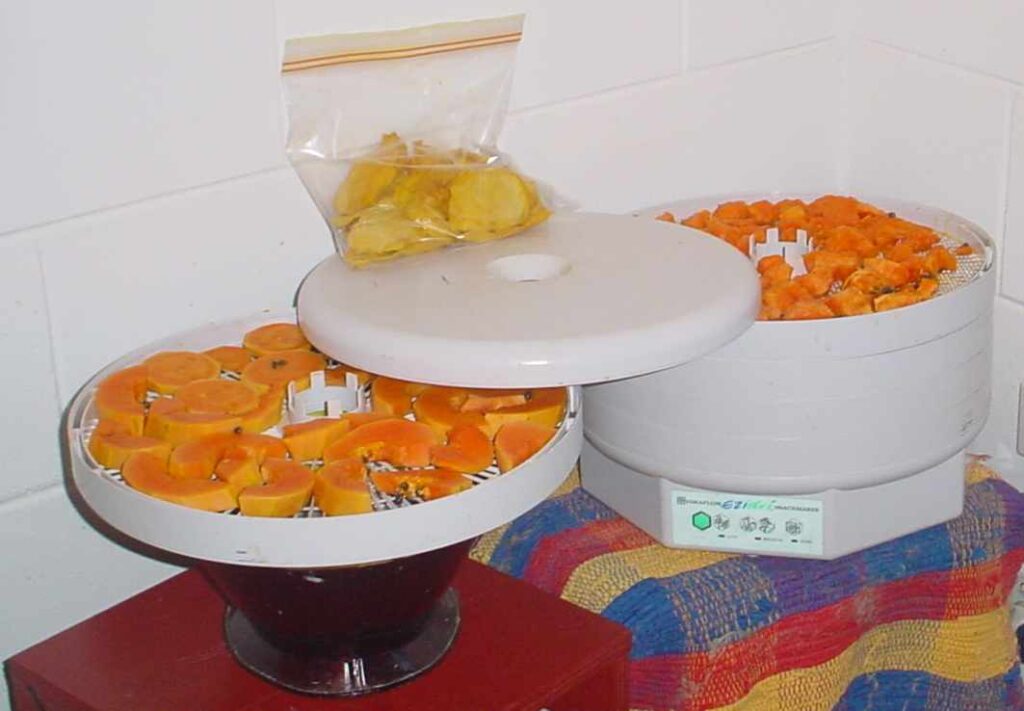

The NESCO FD-75A is the classic round dehydrator and one of the best-reviewed models on Amazon. It is a 600-watt unit with a top-mounted fan, ships with five trays, and can be expanded with extra trays when you have a big harvest to put up. The adjustable thermostat covers the usual range from herbs to jerky. It is light, easy to store, and the best value if you want to dry apple rings, tomatoes, herbs and fruit leather a few times a season.
Consider: like all stacking models, drying is less even than a box machine, so plan to rotate trays.
3. NESCO Snackmaster Encore with Jerky Gun Kit
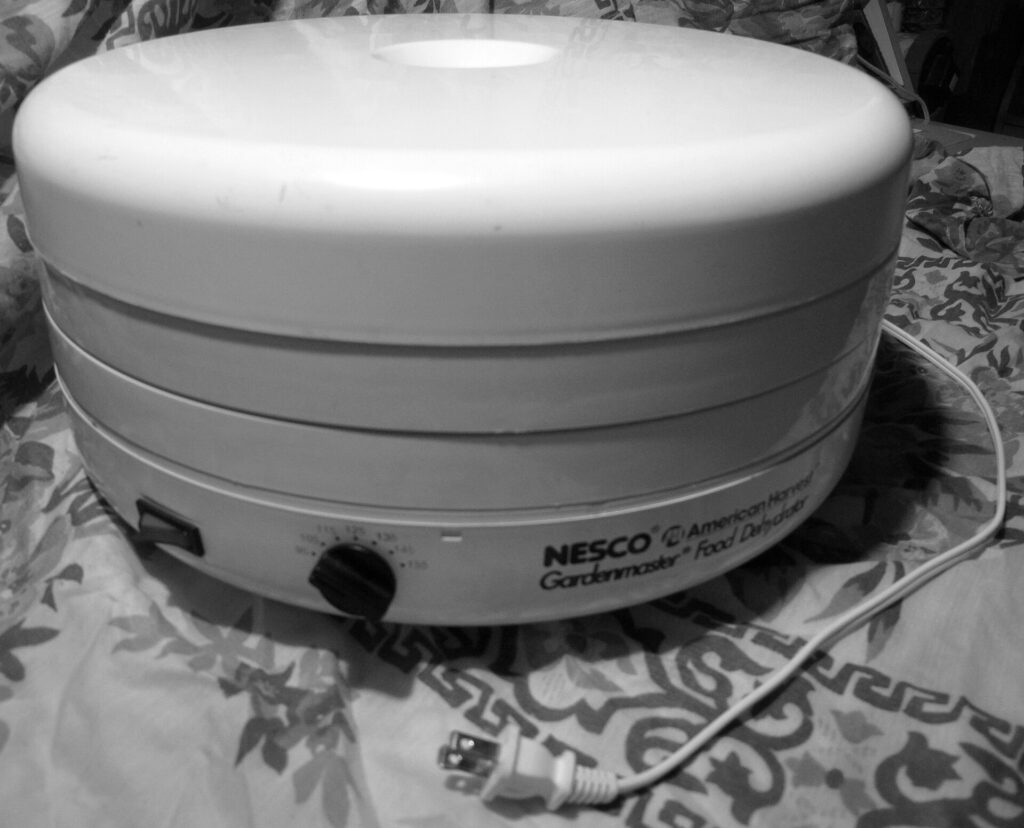

If jerky is the main reason you want a dehydrator, the NESCO Snackmaster Encore kit bundles a round dehydrator with a jerky gun for making ground-meat strips. It is the simplest way to get everything for your first batch in one box. Pair it with our step-by-step guide to making beef jerky in a dehydrator, which covers the safety step most recipes skip.
4. Magic Mill Pro (7 stainless steel trays)
The Magic Mill Pro is another box-style machine with seven stainless steel trays. It gives you more shelf space than the COSORI, which matters when you are drying a whole bushel of apples or several pounds of jerky at once. Choose it if capacity is your main concern.
5. Hamilton Beach 32100C
The Hamilton Beach 32100C is a basic stacking dehydrator for people who just want to try drying food without spending much. It is fine for herbs, fruit and occasional snacks. If you find yourself using it every week, you will probably outgrow it and want a box-style machine.
What to look for when buying a dehydrator
- Adjustable temperature. You need low heat (around 95–115°F) for herbs, medium heat for fruit and vegetables, and higher heat for jerky. A fixed-temperature dehydrator limits what you can make.
- Airflow direction. Horizontal (rear-fan) airflow dries more evenly. Vertical airflow works, but you will rotate trays.
- Tray material. Stainless steel trays do not stain or absorb odors and are dishwasher-friendly; BPA-free plastic trays are lighter and cheaper.
- Capacity. Count trays and tray size. A big harvest of tomatoes or apples fills trays fast.
- Timer and auto shut-off. Useful for overnight batches.
- Accessories. Fruit-leather sheets and mesh screens for small items like herbs and blueberries are worth having.
Dehydrator temperature guide
| Food | Typical setting | Notes | |
|---|---|---|---|
| Herbs | 95–115°F | Low heat protects flavor and color | |
| Vegetables | 125–135°F | Blanch many vegetables first for better color and storage | |
| Fruit and fruit leather | 130–135°F | Pre-treat light fruit to limit browning | |
| Jerky | Heat meat to 160°F first, then dry at 145–155°F | See our {L:beef-jerky-in-a-dehydrator | jerky guide} |
These are typical ranges. Always follow your machine’s manual and a tested recipe, and for meat follow USDA guidance on heating the meat to a safe internal temperature.

Getting the most from a dehydrator
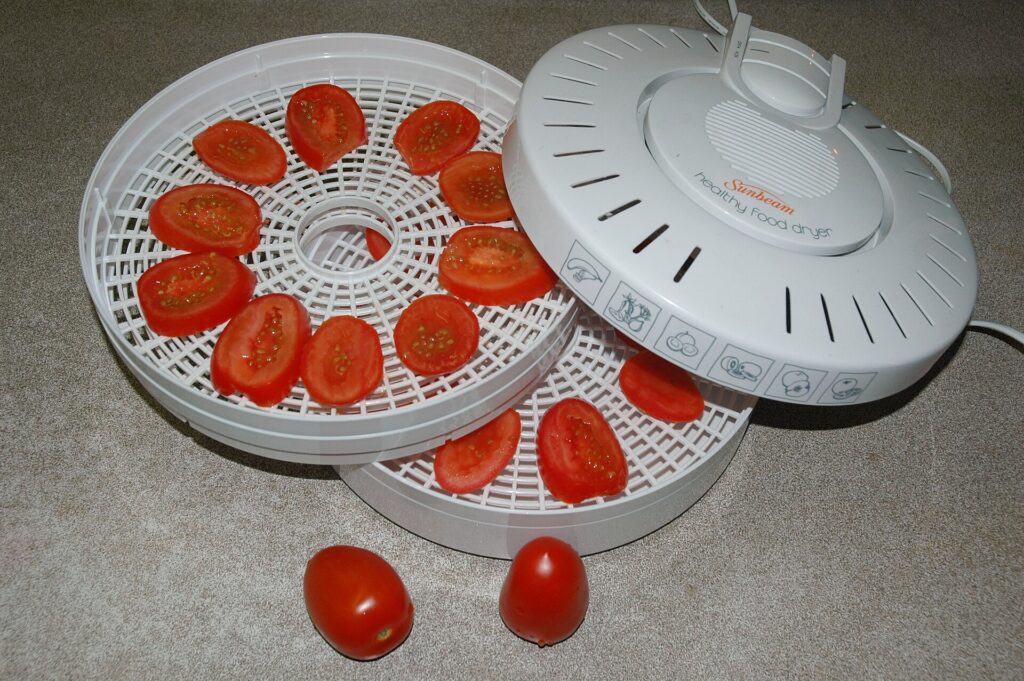
Cut food to an even thickness so everything on a tray finishes at the same time; a mandoline helps. Leave space between pieces so air can move. Dry until the food is leathery or crisp as the recipe describes, then cool it and condition it in a closed jar for a few days, shaking daily, to check that no moisture beads form. Store dried food in airtight jars in a cool, dark cupboard. Our guide to canning jars covers jars that work just as well for dry storage.
FAQ
Is a dehydrator better than an oven?
A dehydrator holds a low, steady temperature with constant airflow and uses far less energy than running an oven for 8–12 hours. Many ovens cannot hold temperatures below about 170°F, which can cook rather than dry food.
Can you make jerky in any dehydrator?
You can make jerky in any dehydrator that reaches the temperatures recommended for meat. Because most dehydrators do not heat meat fast enough to kill bacteria on their own, USDA recommends heating meat to 160°F (poultry to 165°F) before or after drying. Our jerky guide walks through it.
How long does dehydrated food last?
Properly dried and stored food keeps for months, and quality is best within about a year. Keep it airtight, cool and dark, and check for moisture or off smells before eating.
Related guides: Dehydrated apples · Dehydrated orange slices · Vacuum sealers
Sources
- National Center for Home Food Preservation, Drying
- USDA Food Safety and Inspection Service, Jerky and Food Safety