Some links are affiliate links: as an Amazon Associate we earn from qualifying purchases. See our affiliate disclosure.
Canning tomatoes is the best way to keep the taste of local summer tomatoes all winter, and it is one of the first things most people learn to can. Tomatoes can be processed in a boiling water bath, but only with added acid, because many modern varieties are close to the line between high-acid and low-acid foods. This guide follows the tested USDA and National Center for Home Food Preservation (NCHFP) methods for whole or halved tomatoes, crushed tomatoes and plain tomato sauce.
What you need
- About 3 pounds of tomatoes per quart jar (roughly 1½ pounds per pint)
- Bottled lemon juice or food-grade citric acid
- A water bath canner or a large pot with a rack
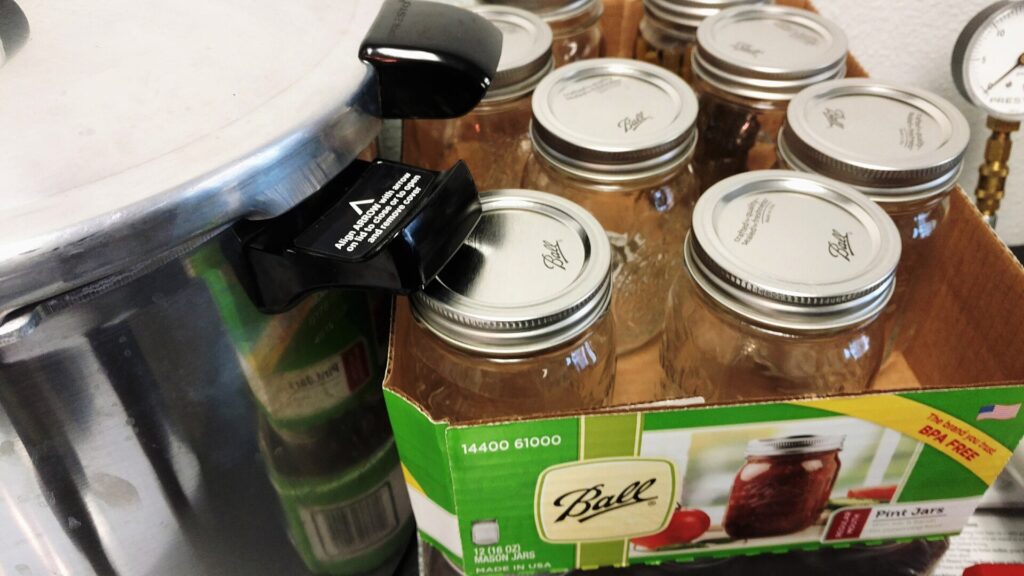
- Canning jars, such as Ball regular-mouth pints or wide-mouth quarts, with new lids and bands
- A jar lifter and wide-mouth funnel
- Optional: canning salt, and a food mill for sauce
New to canning? Start with our canning supplies checklist.
Step 1: Choose and prepare tomatoes
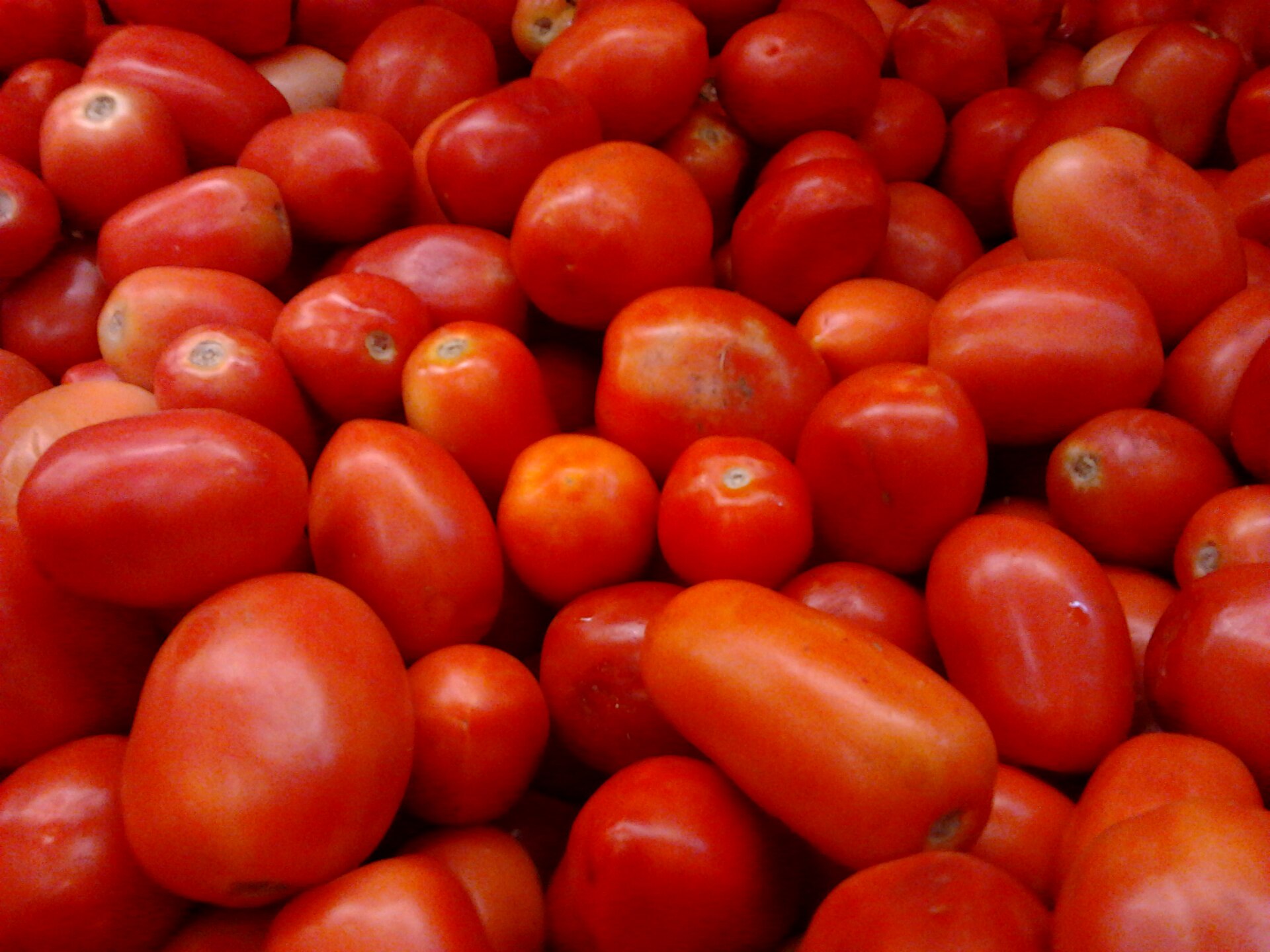
Use firm, ripe, disease-free tomatoes. Do not can tomatoes from dead or frost-killed vines, or overripe and damaged fruit, because their acidity can be lower. Paste tomatoes such as Roma give thicker sauce with less cooking; slicing tomatoes are fine for whole and crushed packs.
To peel, dip tomatoes in boiling water for 30 to 60 seconds until the skins split, then plunge them into cold water. The skins slip off. Remove the cores and trim any green or bruised areas.
Step 2: Add acid to every jar
Add the acid directly to each jar before filling. This step is required for every tomato recipe below, including if you pressure can them.
| Jar size | Bottled lemon juice | or Citric acid |
|---|---|---|
| Pint | 1 tablespoon | ¼ teaspoon |
| Quart | 2 tablespoons | ½ teaspoon |
Use bottled lemon juice, not fresh, because its acidity is standardized. Vinegar (4 tablespoons per quart) is also allowed but changes the flavor. A little sugar can offset the sour taste. Salt is optional and only for flavor: ½ teaspoon per pint or 1 teaspoon per quart.

Method 1: Whole or halved tomatoes packed in water
- Peel and core the tomatoes. Leave them whole or cut them in half.
- Raw pack: pack raw tomatoes into hot jars and cover with boiling water. Hot pack: cover the tomatoes with water in a pot, boil gently for 5 minutes, then pack hot tomatoes into hot jars and cover with the hot cooking liquid.
- Leave ½ inch headspace. Remove air bubbles, wipe the rims, and apply lids and bands fingertip tight.
- Process in a boiling water canner using the times below.
| Jar size | 0–1,000 ft | 1,001–3,000 ft | 3,001–6,000 ft | Above 6,000 ft |
|---|---|---|---|---|
| Pints | 40 min | 45 min | 50 min | 55 min |
| Quarts | 45 min | 50 min | 55 min | 60 min |
Method 2: Crushed tomatoes (no added liquid)
- Peel and quarter the tomatoes. Heat about a pound of quarters in a large pot, crushing them as they heat to release juice.
- Keep adding the rest of the quarters while stirring, and boil gently for 5 minutes once all are added.
- Fill hot jars with the hot tomatoes, leaving ½ inch headspace.
- Process in a boiling water canner.
| Jar size | 0–1,000 ft | 1,001–3,000 ft | 3,001–6,000 ft | Above 6,000 ft |
|---|---|---|---|---|
| Pints | 35 min | 40 min | 45 min | 50 min |
| Quarts | 45 min | 50 min | 55 min | 60 min |
Crushed tomatoes are the most useful all-purpose pack for soups, chili and pasta sauce.
Method 3: Standard tomato sauce

- Wash and quarter the tomatoes; you do not need to peel them if you use a food mill.
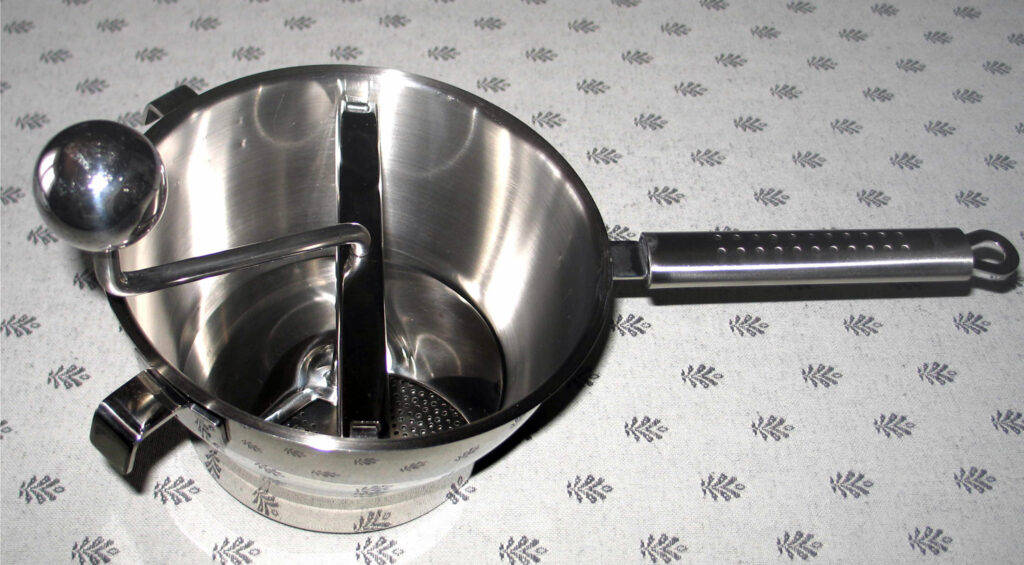
- Simmer the tomatoes until soft, then press them through a food mill like the OXO Good Grips or a sieve to remove skins and seeds.
- Simmer the sauce until it reaches the thickness you want. Thin sauce takes about a third less volume; thick sauce about half.
- Add acid to the jars, fill with hot sauce leaving ¼ inch headspace, and process.
| Jar size | 0–1,000 ft | 1,001–3,000 ft | 3,001–6,000 ft | Above 6,000 ft |
|---|---|---|---|---|
| Pints | 35 min | 40 min | 45 min | 50 min |
| Quarts | 40 min | 45 min | 50 min | 55 min |
This is a plain tomato sauce. Do not add onions, peppers, garlic, oil or meat unless you follow a tested recipe for that specific sauce, because they lower the acidity and change the processing needed.
Step 3: Cool, check seals and store
When the time is up, turn off the heat, remove the canner lid and wait 5 minutes, then lift the jars straight out with a jar lifter. Set them on a towel and leave them undisturbed for 12 to 24 hours. Check that each lid is concave and does not flex when pressed. Refrigerate any unsealed jar and use it within a few days. Remove the bands, wipe and label the jars, and store them in a cool, dark place. Use within a year for best quality.
FAQ
Why do I have to add lemon juice to tomatoes?
Tomatoes range from about pH 4.0 to over 4.6. Adding acid makes sure every jar is acidic enough for safe boiling water processing.
Can I pressure can tomatoes instead?
Yes. NCHFP gives pressure canning options for these packs, which can be shorter. You still add the same acid. See our pressure canner guide.
Why did my tomatoes separate in the jar?
Raw-packed tomatoes often float and separate from the liquid. It is a quality issue, not a safety one. Hot packing reduces it.
Can I can green tomatoes?
Yes, green tomatoes can be canned the same way, with the same added acid.
Related guides: Canning salsa · Canning spaghetti sauce
Sources
- National Center for Home Food Preservation, Whole or Halved Tomatoes Packed in Water
- National Center for Home Food Preservation, Crushed Tomatoes
- NCHFP, Tomato Products Processing Times