Some links are affiliate links: as an Amazon Associate we earn from qualifying purchases. See our affiliate disclosure.
Fermenting is the oldest and simplest way to preserve vegetables: salt, time and the right container turn cabbage into sauerkraut, napa cabbage into kimchi and cucumbers into sour pickles. You do not need much equipment, but the right crock, jar and weight make the difference between a clean ferment and a moldy one. This guide compares fermentation crocks, mason-jar kits and weights, and explains which is right for how much you ferment.
Quick picks
- Best crock for sauerkraut: Kenley 4-litre (1-gallon) fermentation crock with pounder.
- Best crock with weights included: HomeBuddy 1-gallon fermentation crock with weights.
- Best mason-jar kit: 6-set fermentation lids for wide-mouth jars.
- Best weights: Masontops Pickle Pebbles glass weights.
Crock or jar?
| Option | Best for | Pros | Cons |
|---|---|---|---|
| Water-seal crock | Big batches of sauerkraut, kimchi, pickles | Water channel keeps air out; holds a whole head or more of cabbage; ceramic blocks light | Heavy, more expensive, harder to clean |
| Open crock | Traditional large batches | Simple and roomy | Needs a cloth cover and weight; more surface exposure |
| Mason jar with airlock lid | Small batches, trying recipes | Cheap, easy to see inside, fits in the fridge | Small capacity; needs a weight |
If you are new to fermenting or make a jar at a time, start with wide-mouth mason jars and an airlock lid kit. If you put up sauerkraut from several heads of cabbage every fall, a water-seal crock is worth it.
The best fermentation crocks
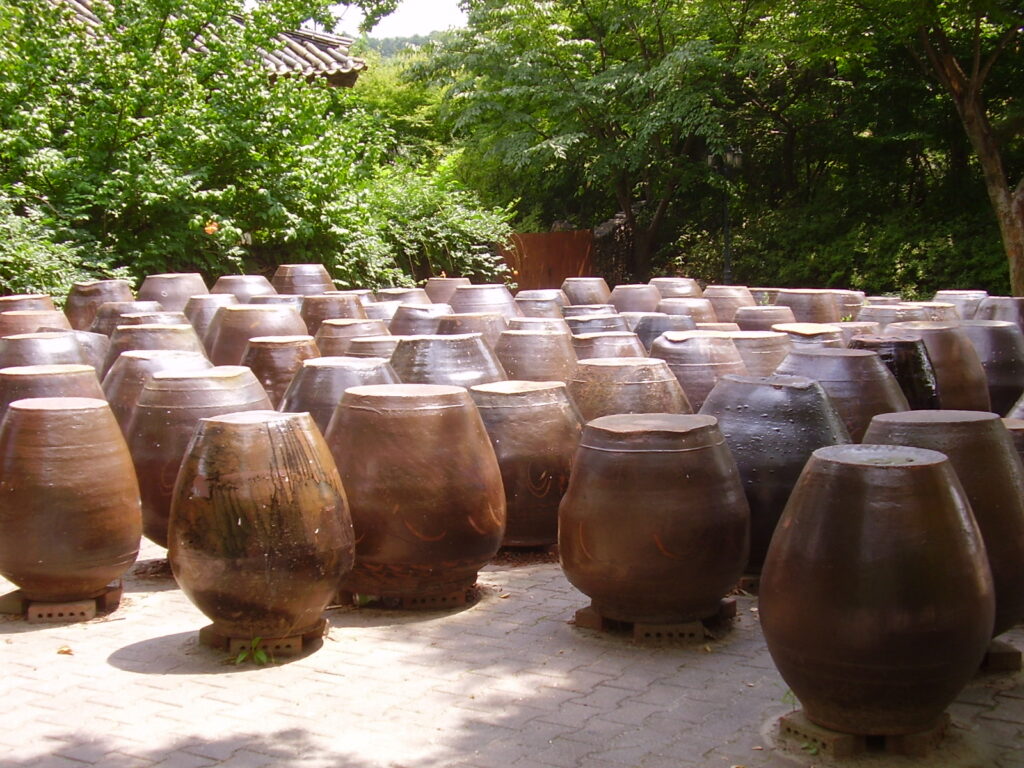

Kenley Fermentation Crock (4 litres)
The Kenley 4-litre crock is a water-seal crock: the lid sits in a channel that you fill with water, which lets fermentation gases bubble out while keeping air and insects out. It comes with a wooden pounder for packing cabbage. About 1 gallon is the right size for a household batch of 4 to 5 pounds of cabbage.
HomeBuddy Fermentation Crock with Weights (1 gallon)
The HomeBuddy 1-gallon crock is a similar water-seal design that includes ceramic weights to hold the vegetables under the brine, so you have everything you need in one box.
The best mason-jar fermentation kits
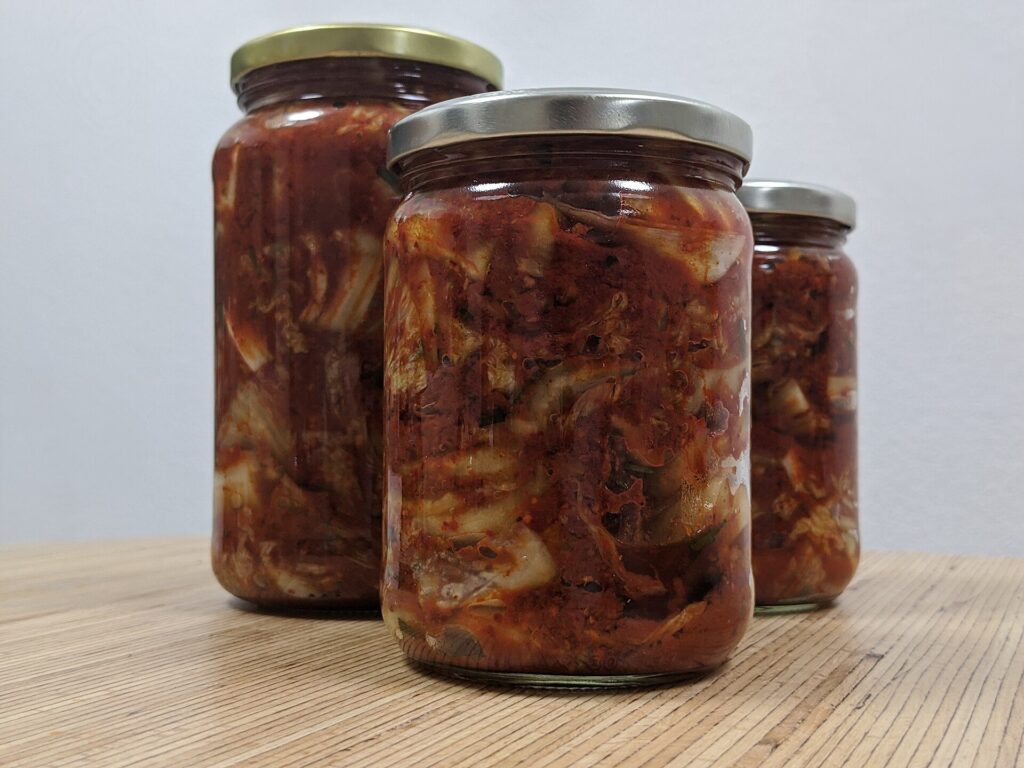

A set of airlock fermentation lids for wide-mouth jars turns ordinary wide-mouth mason jars into small fermenters. The one-way valve lets carbon dioxide escape without letting air back in, so you do not have to “burp” the jar. Quart jars are ideal for a small head of cabbage, a batch of kimchi or a few pounds of cucumbers.
Fermentation weights
The vegetables must stay under the brine, because anything sitting in air can grow mold. Weights solve that. Glass weights like Masontops Pickle Pebbles fit inside wide-mouth jars, do not react with salt or acid, and are easy to clean. In a crock, use the ceramic weights that came with it, or a food-safe plate topped with a sealed bag of brine.
How to make basic sauerkraut
- Remove the outer leaves and core from 5 pounds of cabbage and shred it finely.
- Mix the cabbage with 3 tablespoons of canning and pickling salt (about 2 to 2.5% by weight). Use pure salt without iodine or anti-caking agents.
- Let it sit for 15 minutes, then pack it firmly into the crock or jars, pressing until the juice rises above the cabbage.
- Weigh the cabbage down so it stays at least 1 to 2 inches below the brine. If there is not enough juice after 24 hours, top it up with brine made from 1½ tablespoons of salt per quart of water.
- Ferment at 70 to 75°F for about 3 to 4 weeks, or 5 to 6 weeks at 60 to 65°F. Below 60°F it may not ferment; above 75°F it can turn soft.
- When it tastes right to you, move it to the refrigerator, where it keeps for months, or can it using a tested recipe.
Troubleshooting: kahm yeast vs mold
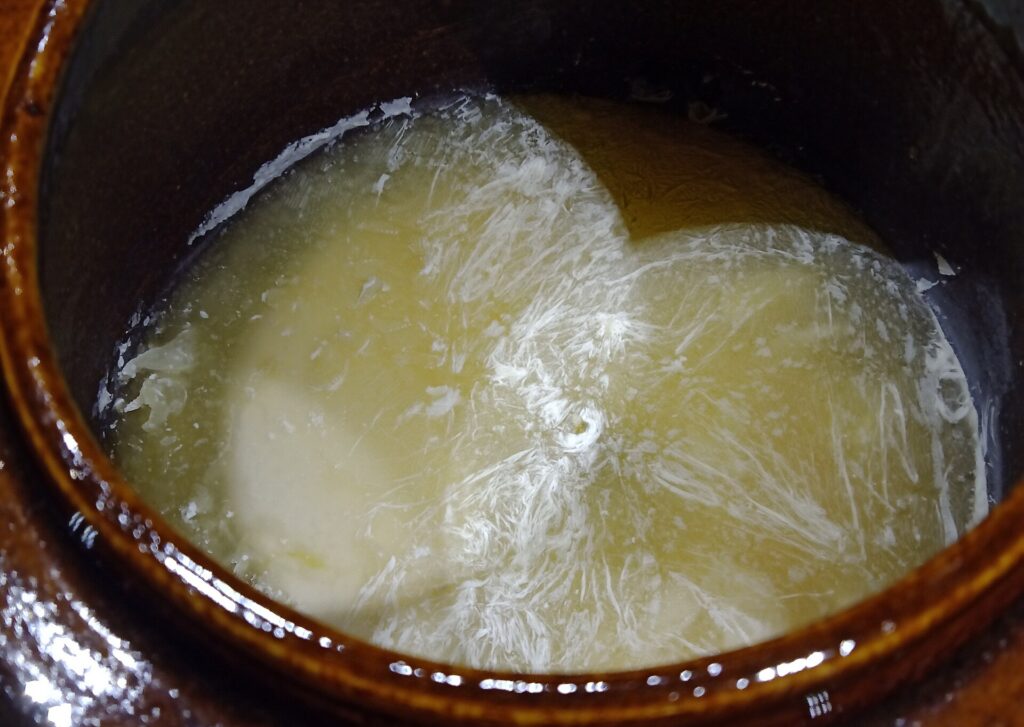

A thin, flat, white film on the surface is usually kahm yeast. It is not harmful, but it can affect flavor: skim it off and make sure the vegetables are under the brine. Fuzzy, raised, colored mold (blue, green, black or pink), a slimy texture, or a rotten smell is different. If you see those, throw the batch out.
FAQ
What size crock should I buy?
A 1-gallon (about 4-litre) crock holds roughly 4 to 5 pounds of shredded cabbage, which is a good size for most households. Choose 2 gallons or more only if you ferment several heads at once.
Do I need an airlock?
No, people fermented for centuries without one, but an airlock lid or water-seal crock lowers the risk of surface mold and means less checking.
Can I use metal containers?
Avoid reactive metals like aluminum, copper or iron. Use glass, food-grade stoneware or food-grade plastic.
Related guides: How to make sauerkraut · Fermented dill pickles
Sources
- National Center for Home Food Preservation, Fermenting
- USDA Complete Guide to Home Canning, Guide 6: Preparing and Canning Fermented Foods and Pickled Vegetables