Updated November 2026. Some links are affiliate links: as an Amazon Associate we earn from qualifying purchases.
Fermentation lids turn ordinary mason jars into small-batch fermenting vessels for sauerkraut, kimchi, pickles and hot sauce. They let the carbon dioxide produced during fermentation escape while keeping air, dust and fruit flies out, so you do not have to “burp” jars every day. For anyone who ferments in small batches or does not have room for a crock, they are an inexpensive upgrade.
These are our picks from Amazon.ca, chosen on design, materials and buyer reviews. We have not lab-tested them ourselves.
Quick picks
- Best overall: Easy Fermenter Fermentation Lids Kit, a highly rated airlock lid kit for wide-mouth mason jars
- Best value set: Klemon 6-Set Fermentation Lids, enough lids for several batches at once
- Best silicone waterless lids: KLEBREIS Silicone Fermenting Lids, 5-pack, simple one-piece silicone airlocks
The best fermentation lids
1. Easy Fermenter Lids Kit: best overall
Easy Fermenter’s kit fits wide-mouth mason jars and uses a one-way valve to release gas without letting air back in. It is one of the highest-rated fermentation lid kits on Amazon.ca. Check the listing for exactly what is included, such as a pump or date tracker.
Check the Easy Fermenter kit on Amazon.ca →
2. Klemon 6-Set Fermentation Lids: best value set
With six lids, this set lets you run several ferments at once, such as a jar of sauerkraut, a jar of carrots and a hot sauce mash, and stagger them through the season. It has hundreds of reviews.
Check the Klemon fermentation lids on Amazon.ca →
3. KLEBREIS Silicone Fermenting Lids: best silicone waterless lids
One-piece silicone lids have a small slit valve that opens to vent gas and closes again, with no water-filled airlock to top up or knock over. They are easy to clean and store flat.
Check the KLEBREIS silicone lids on Amazon.ca →
Comparison
| Lids | Type | Best for |
|---|---|---|
| Easy Fermenter | One-way valve kit | Most fermenters |
| Klemon 6-set | Airlock lids | Several batches at once |
| KLEBREIS | Silicone, waterless | Simple, low-maintenance |
Airlocks vs silicone lids vs regular lids
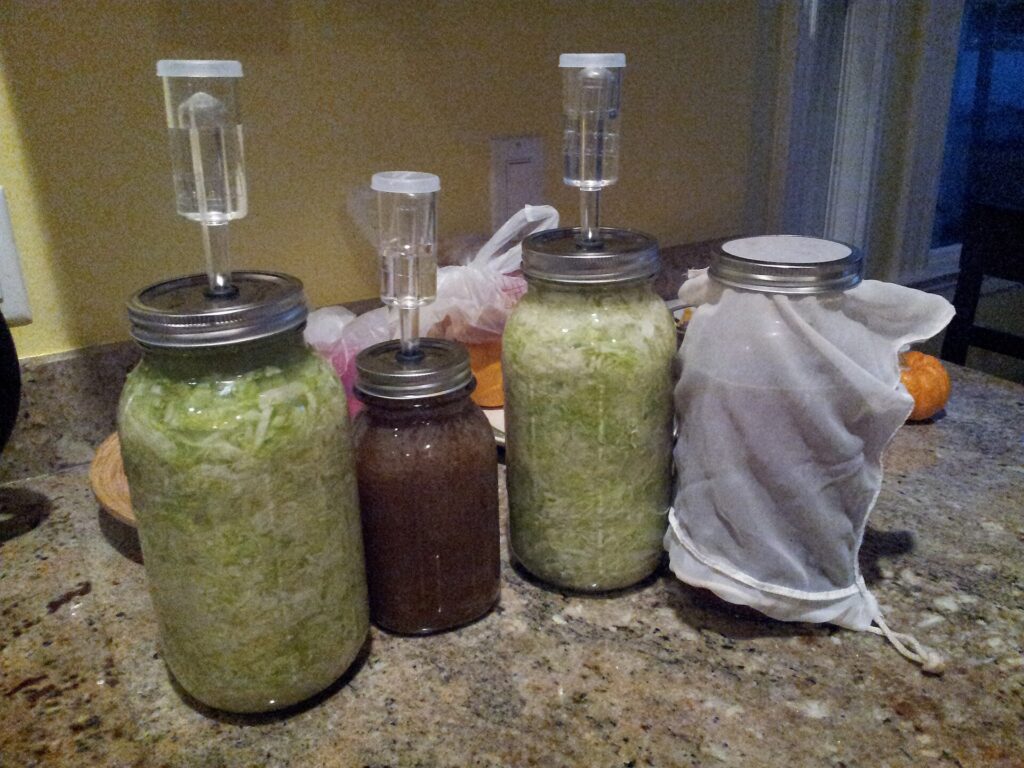
- Water airlocks: a small chamber of water lets gas bubble out. Reliable and visible, but they can be knocked over and need topping up.
- Valve and silicone lids: waterless designs that vent automatically. Low maintenance and easy to store.
- Regular lids: you can ferment with a loosely fitted standard lid, but you must vent (“burp”) the jar regularly and you will see more surface yeast and spoilage.
Fermentation lids work best with weights
Keeping vegetables completely under the brine is the single most important rule in fermenting. Anything above the brine is exposed to air and can grow mould. Pair your lids with glass or ceramic fermentation weights; see our guide to fermentation crocks, jars and weights.
Getting started with a tested recipe
Fermentation safety depends on the right amount of salt, good ingredients, a suitable temperature and keeping vegetables submerged. Start with a tested recipe, such as our sauerkraut or fermented dill pickles from established sources, and measure the salt by weight exactly as written. A fermentation lid changes how gas escapes, not how much salt or time a recipe needs.
Cleaning and care
- Wash lids and valves in warm, soapy water after each batch and let them dry completely.
- Check silicone valves for tears and replace them if they no longer seal.
- Store lids out of direct sunlight, which can degrade silicone and plastic.
- Use clean jars with no chips on the rim, so the lid seals evenly.
Frequently asked questions
Do I still need to burp jars with fermentation lids?
No. That is the main benefit: the valve or airlock releases gas automatically.
What is the white film on my ferment?
A thin white film is often harmless surface yeast, but it should be skimmed off. Fuzzy, coloured mould, a slimy texture or an unpleasant smell means the batch should be discarded. Keeping vegetables under the brine prevents most problems.
Can I use fermentation lids on regular-mouth jars?
Only if the lids are made for that size. Most kits are for wide-mouth jars, so check before you buy.