Updated November 2026. Some links are affiliate links: as an Amazon Associate we earn from qualifying purchases.
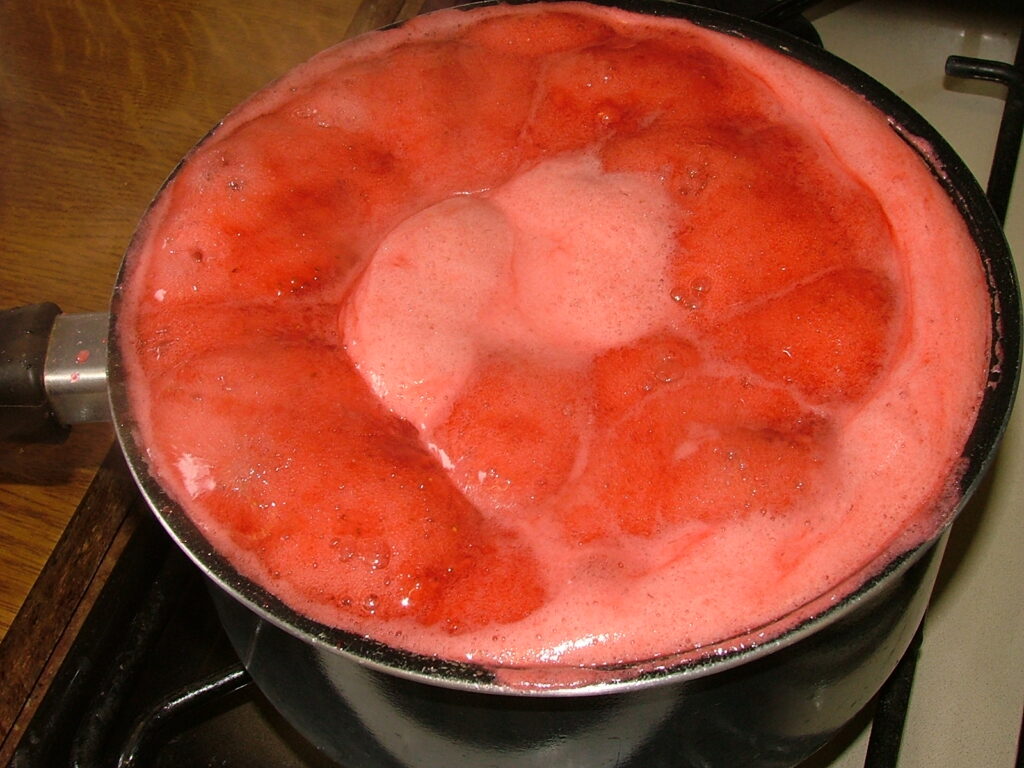
A good jam pan makes jam-making easier and more reliable. Traditional maslin pans are wide and slope outwards, with a heavy base and a sturdy handle. The wide surface lets water evaporate quickly, so jam reaches its setting point faster and keeps a fresher fruit flavour, while the thick base spreads the heat and helps stop sugar scorching on the bottom. The tall sides also give boiling jam room to foam up without spilling over.
These are our picks from Amazon.ca, chosen on material, capacity and buyer reviews. We have not lab-tested them ourselves.
Quick picks
- Best overall: KitchenCraft Home Made Stainless Steel Maslin Pan, a classic stainless steel jam pan with thousands of strong reviews
- Best mid-size: Penguin Home 5 L Maslin Pan, a smaller stainless pan for modest batches
The best jam pans
1. KitchenCraft Home Made Maslin Pan: best overall
KitchenCraft’s Home Made maslin pan is a traditional stainless steel jam pan with a heavy base, sloping sides, a carrying handle and a pouring lip. Stainless steel is non-reactive, so it will not react with acidic fruit or affect the colour and flavour of your preserves. It has thousands of reviews and a very high rating on Amazon.ca.
Check the KitchenCraft maslin pan on Amazon.ca →
2. Penguin Home 5 L Maslin Pan: best mid-size
If you make smaller batches, which tested recipes often recommend, a 5-litre maslin pan is easier to store and handle. Penguin Home’s stainless steel pan is highly rated by buyers.
Check the Penguin Home maslin pan on Amazon.ca →
Comparison
| Pan | Material | Best for |
|---|---|---|
| KitchenCraft Home Made | Stainless steel | Regular jam-makers, larger batches |
| Penguin Home 5 L | Stainless steel | Small batches, smaller kitchens |
What to look for in a jam pan
- Non-reactive material: stainless steel or enamel. Acidic fruit can react with bare aluminium or unlined copper.
- Heavy base: spreads heat evenly and helps prevent scorching.
- Wide, sloping sides: speed up evaporation and give foam room to rise.
- Capacity: the pan should be large enough that the jam fills it no more than about halfway, since jam rises dramatically at a full rolling boil.
- Handle and pouring lip: make it safer to move and pour hot jam.
Do not double jam recipes
It is tempting to make one huge batch in a big pan, but tested jam recipes, especially those with added pectin, are designed for specific quantities. Doubling them often leads to jam that does not set, because the larger volume takes longer to reach temperature and cooks unevenly. Make several batches instead, following the recipe exactly each time. A wide pan helps each batch reach its set quickly.
Jam-making tips
- Follow a tested recipe, such as our raspberry jam or blueberry jam, from an established source.
- Measure fruit, sugar, pectin and lemon juice exactly; they work together to set the jam and, in canned jams, to keep it safe.
- Stir often, especially near the end, and scrape the bottom of the pan.
- Skim off foam before filling jars.
- Use a jar lifter and a wide-mouth funnel when filling and processing jars.
Using your jam pan for other preserves
A maslin pan is also excellent for chutneys, fruit butters, marmalade, and reducing tomato sauce, any recipe where you want liquid to evaporate efficiently. Its large capacity is useful for blanching fruit, too. When canning these foods, always use a tested recipe and process the jars as it directs.
Frequently asked questions
Is a maslin pan necessary for making jam?
No. Any large, heavy-based, non-reactive pot will work. A maslin pan just makes it easier and faster because of its shape and thick base.
Can I use a maslin pan on an induction hob?
Some stainless steel maslin pans are induction-compatible and some are not. Check the listing or test with a magnet on the base.
How full should the pan be?
Leave plenty of room. Jam can rise to two or three times its volume at a full rolling boil, so a pan that is about half full or less is safer.